
Affiliate Disclosure: This Moosend review may contain affiliate links. If you sign up through them, I may earn a small commission at no extra cost to you. I only recommend tools I have personally evaluated, and this never influences my honest opinion.
When businesses think about growth, most focus on traffic.
More ads. More clicks. More visitors.
But here’s the reality: traffic alone doesn’t grow revenue. The real growth happens when visitors become leads, leads become customers, and customers keep coming back. That is exactly where email marketing becomes one of the highest ROI channels for any business.
The problem? Most businesses struggle with:
- low open rates
- poor engagement
- manual follow-ups
- abandoned carts
- inactive subscribers
- inconsistent lead nurturing
This is where Moosend positions itself as a practical solution. In this detailed Moosend review, I’ll break down everything from a business-first perspective — what it actually does, what problems it solves, who should buy it, practical workflows, strengths and weaknesses, accurate 2026 pricing, and how it compares to Mailchimp, ActiveCampaign, Brevo, and GetResponse. This article is written to help you make a confident decision.
What is Moosend?
Moosend is an email marketing and automation platform designed for businesses that want to automate communication, improve engagement, and drive conversions. It is one of the most affordable full-featured email marketing tools available in 2026, making it especially popular among startups, SMBs, SaaS companies, and ecommerce brands that want professional automation without enterprise-level pricing.
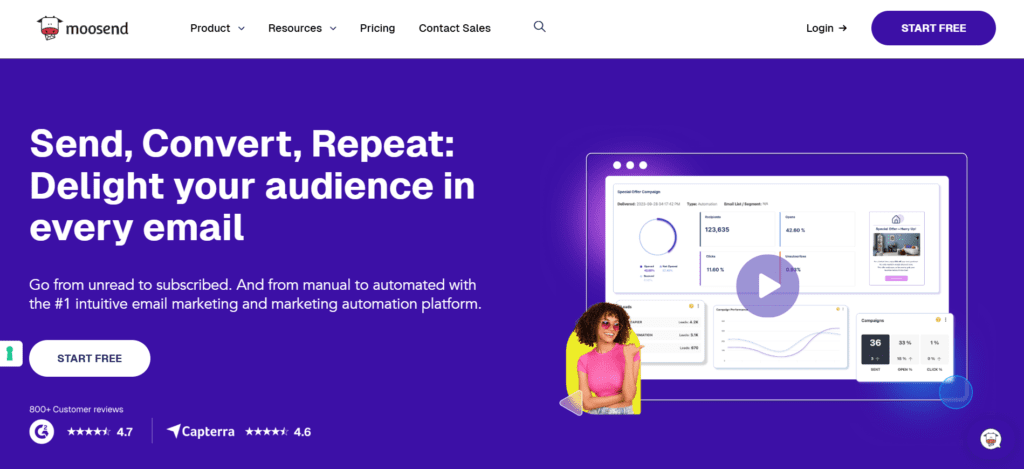
At its core, it helps businesses create newsletters, promotional campaigns, automated workflows, landing pages, signup forms, and complete customer journeys. But what makes it valuable is not just sending emails — the real value lies in automation and segmentation. Instead of sending the same email to every subscriber, Moosend allows businesses to create behavior-based workflows.
For example: a user visits your pricing page but doesn’t sign up. Instead of losing that lead, the system can automatically trigger a follow-up email sequence. That’s where the practical value starts.
Read Best Email Marketing and Automation Tools for 2026 – Top 10 Platforms Tested Click Here
Why Businesses Need a Tool Like Moosend
A lot of businesses face the same issue. They collect leads — maybe through website forms, blog downloads, ads, webinar registration, or product signups — but after that, nothing happens. The leads sit in a list with no structured follow-up, no nurturing, and no conversion strategy. This leads to lost revenue. A lead that was interested today may forget your brand tomorrow.
This is where Moosend solves a major operational problem. It automates follow-ups, ensuring no lead goes cold without communication. That is a real business problem solver — and at a price point that is 4 to 6 times cheaper than many alternatives, it is one of the strongest value propositions in email marketing in 2026.
My Practical Experience-Based Evaluation of Moosend
When evaluating a marketing tool, I always assess it across core business pillars. Here is what I found after hands-on evaluation of Moosend across real workflows.
1.Ease of Use
The first thing any business needs is usability. A powerful tool is useless if teams struggle to use it. Moosend performs strongly here. The interface is clean and the campaign creation follows a logical workflow:
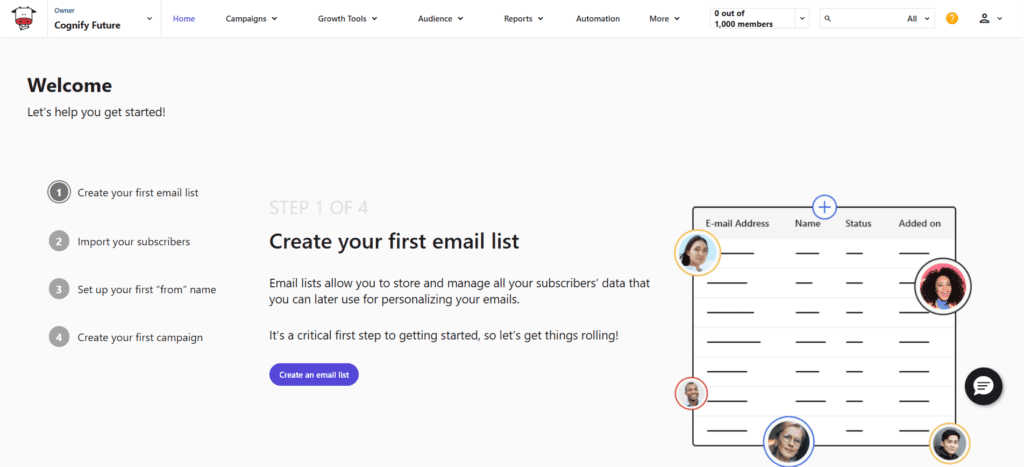
- select audience
- choose template
- customize content
- set automation
- schedule
- track results
For non-technical teams, this matters a lot. A startup founder or marketer should be able to launch campaigns quickly without developer support. Moosend achieves this well — the drag-and-drop builder, pre-built automation templates, and AI Writer all reduce the time to launch your first campaign significantly. Compared to platforms like ActiveCampaign, the onboarding curve is noticeably gentler for beginners.
2.Automation Capability
This is the strongest area of Moosend. Automation is not just a “nice feature” — it directly impacts revenue. The visual automation builder lets you create multi-step, conditional workflows based on subscriber behavior, making it possible to build sophisticated customer journeys without any coding.
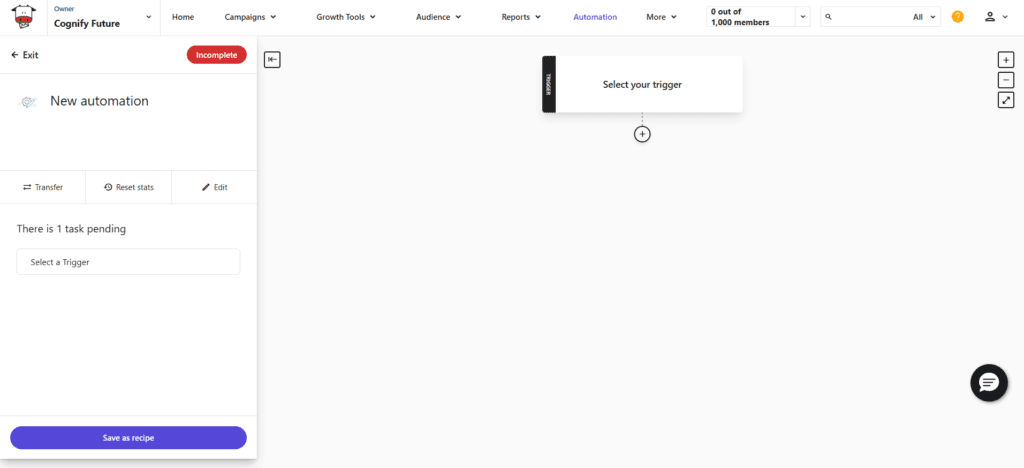
For example: imagine an ecommerce store gets 100 add-to-cart users per day. Only 20 complete checkout. 80 leave. Without automation, those 80 are lost opportunities. With Moosend, you can create an automated recovery workflow:
Step 1
After 30 minutes → reminder email
Step 2
After 12 hours → social proof email
Step 3
After 24 hours → discount email
This single workflow can significantly improve recovery rates and often pays for the entire subscription on its own. The automation builder includes 18+ pre-built workflow templates covering abandoned carts, onboarding, re-engagement, and lead nurturing — which is a practical head start that many competitors charge extra for.
3.Segmentation Intelligence
One of the biggest mistakes businesses make is sending generic emails. Every subscriber gets the same message, which reduces relevance and kills engagement. Moosend allows segmentation based on behavior, location, engagement level, previous purchases, and signup source.
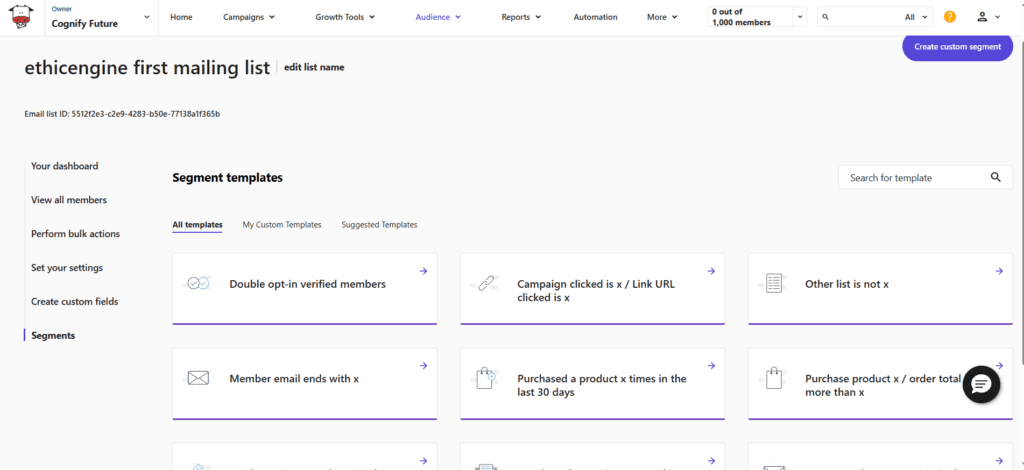
For example: a new subscriber should not receive the same message as an existing customer. Segmentation solves this and directly improves open rates, click-through rate, and conversions. Moosend’s contact-based billing model also has a key advantage here — a contact appearing in multiple lists is counted only once, unlike Mailchimp which can bill you twice for the same person across different audiences.
4.ROI Perspective
A good tool must justify its cost. This is where Moosend becomes extremely attractive. Instead of paying separately for email software, a landing page builder, an automation workflow tool, and a form builder, you can manage everything in one platform. That reduces software stack complexity and operational cost significantly — especially relevant for budget-conscious startups and small teams.
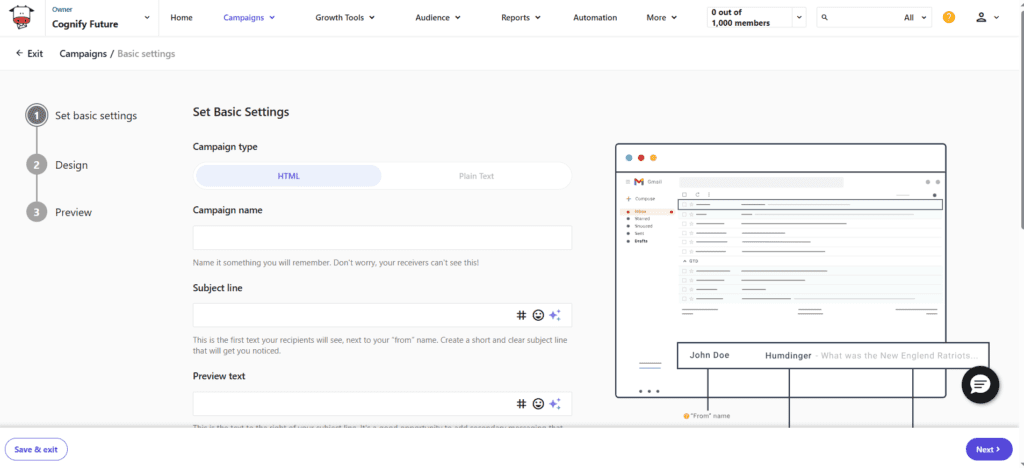
At 10,000 contacts, Moosend costs roughly $88/month on monthly billing or $70/month annually — compared to Klaviyo at $150/month, Mailchimp at $100+/month, and ActiveCampaign at $189/month. That is a meaningful cost advantage for a platform that covers the same core email, automation, landing page, and segmentation needs.
How to Set Up Your First High-Converting Workflow in Moosend
Let’s take a practical example. Suppose you run a SaaS product and your biggest problem is users signing up for a free trial but never converting. Here is how I would recommend setting up the first workflow inside Moosend.
Step 1: Welcome Email
The first email should go immediately after signup. Purpose: build trust, reduce confusion, and improve activation.
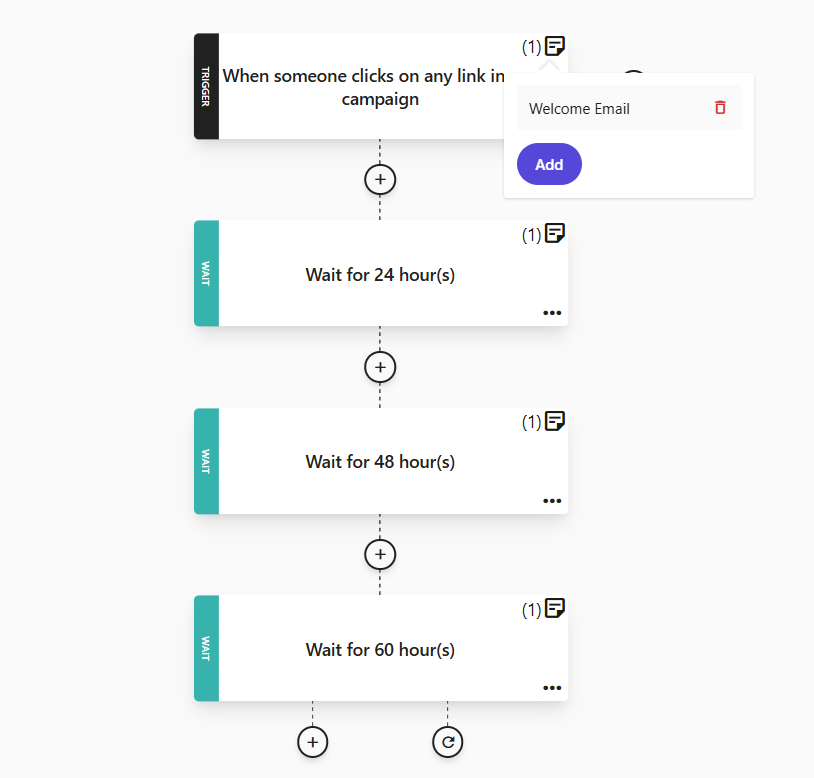
Subject: Welcome to Your Free Trial – Let’s Get You Started
Body should include: a quick welcome message, login link, setup guide, and first action CTA. The goal is to reduce friction and get the user to their first “aha moment” as fast as possible. Welcome emails typically see 4x higher open rates than standard campaigns — so this step alone has outsized impact.
Step 2: Day 2 Product Education
Most users leave because they do not understand the value quickly. This email should focus on solving one specific problem — for example: “How to automate follow-ups in less than 5 minutes.” This should show one quick win that makes the user feel immediate progress.
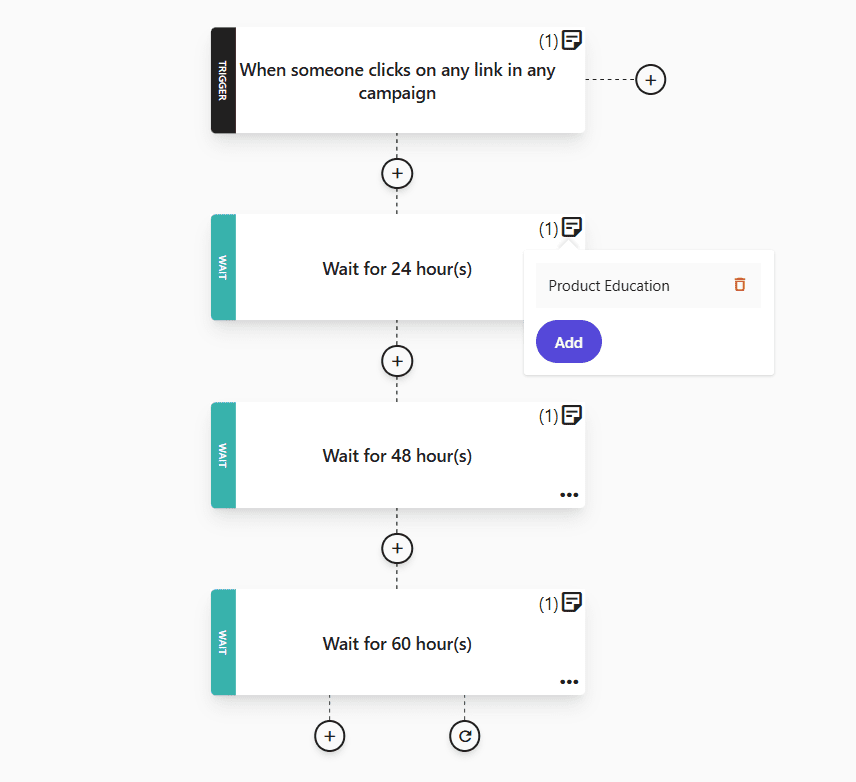
Step 3: Day 4 Social Proof
People trust results. This email should include a customer story, use case, and a measurable outcome. For example: “One agency improved lead response rate by 42% using this workflow.” This builds authority and reduces the objection that the product is unproven.
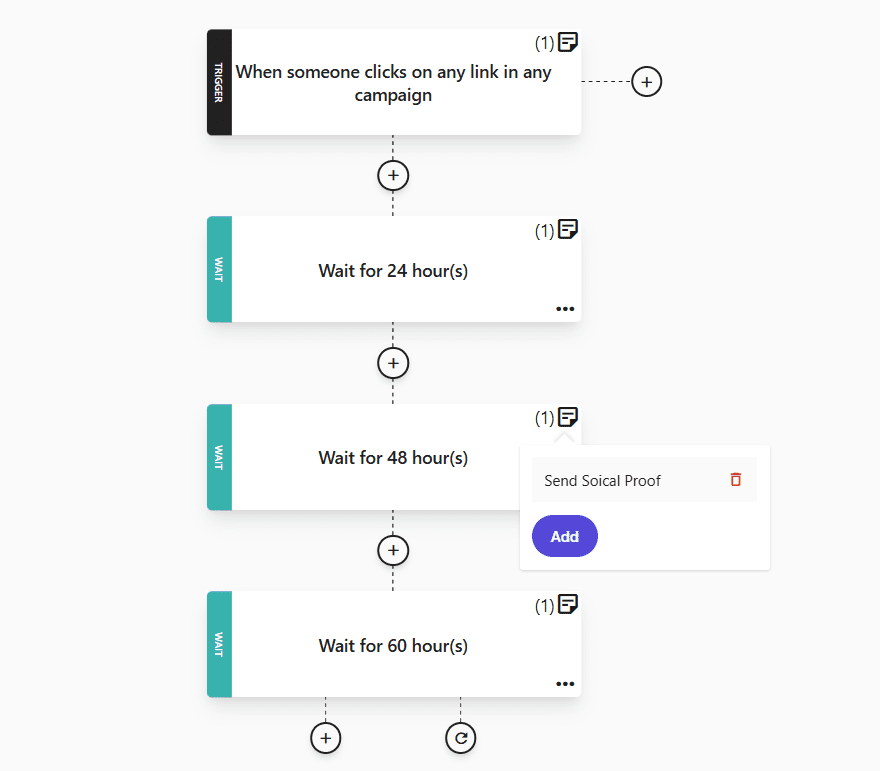
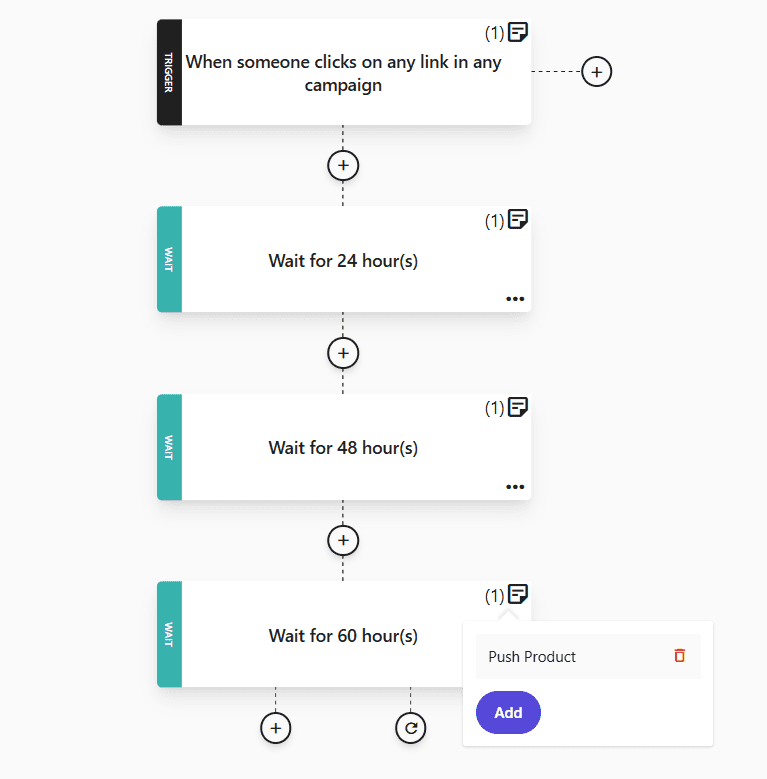
Step 4: Day 7 Upgrade Push
Now the user has enough context to make a buying decision. This is where the sales CTA should come. Keep it benefit-focused: Upgrade today and unlock advanced automation workflows. Include a deadline or limited-time offer if possible to create urgency. This is practical lifecycle marketing — and it is exactly the kind of workflow Moosend is built to handle efficiently.
Moosend Real Business Use Cases
Use Case 1: Ecommerce Abandoned Cart Recovery
This is one of the most valuable workflows any ecommerce business can build. Imagine a customer adds a product to their cart and then leaves without completing checkout. Without follow-up, that sale is gone. With Moosend’s abandoned cart automation, you can automatically send a structured recovery sequence:
Email 1: Friendly Reminder
“Looks like you left something behind.” — Sent 30 minutes after abandonment. Keep the tone warm and low-pressure.
Email 2: Product Benefit Reminder
Highlight reviews, trust badges, fast delivery, and return policy. Sent 12 hours after abandonment to address common purchase hesitations.
Email 3: Incentive
“Complete your purchase and get 10% off.” Sent 24 hours after abandonment. This is a revenue-focused workflow that is very strong for ecommerce brands and can recover a meaningful portion of otherwise lost sales.
Use Case 2: SaaS Free Trial Conversion
SaaS businesses often struggle with activation — users sign up, try the product once, and never come back. Moosend solves this with a structured onboarding automation. Example 7-day flow:
Day 1
Welcome + setup guide
Day 2
Key feature tutorial
Day 3
Problem-solving use case
Day 5
Customer success story
Day 7
Upgrade CTA with limited-time offer
This structured sequence helps convert trial users into paying customers by delivering the right message at the right stage of the user journey — reducing churn and improving trial-to-paid conversion rate.
Use Case 3: Lead Nurturing for Agencies
Agencies receive leads from ads and landing pages, but not every lead converts immediately. A structured nurture sequence builds trust over time and keeps your agency top-of-mind until the prospect is ready to buy.
Email 1
Thank you + introduction to your agency and team
Email 2
Case study showing a specific client result
Email 3
Client testimonials and measurable outcomes
Email 4
Free consultation CTA — low barrier to entry that opens a sales conversation
Moosend Detailed Feature Analysis
1.Moosend Email Builder
The drag-and-drop editor is clean and intuitive. It includes a library of responsive email templates and an AI Writer that generates subject lines and body copy from a prompt — useful for speeding up campaign creation without sacrificing quality. This allows businesses to quickly create newsletters, promotions, onboarding sequences, seasonal campaigns, and product launches without designer support.
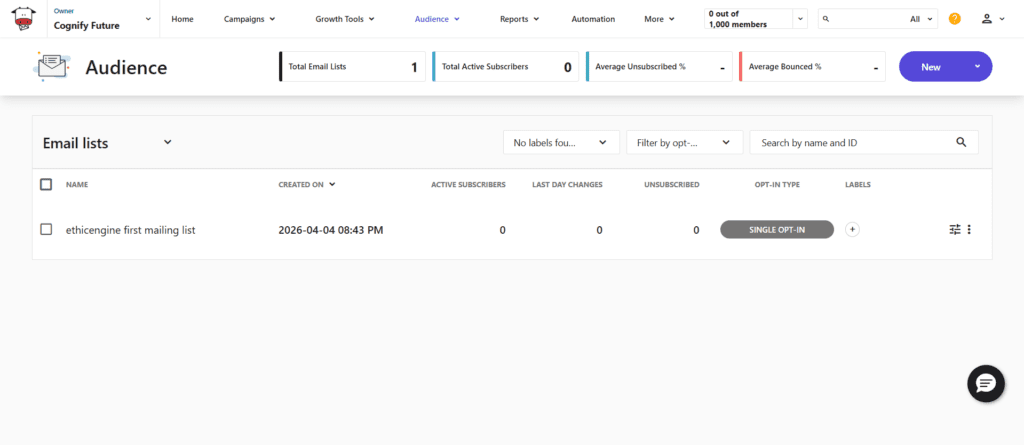
One honest limitation: the template library is smaller than Mailchimp’s, so if you have very specific brand design needs you may need to build custom templates from scratch. However, for most businesses the existing library covers all standard campaign types effectively.
2.Moosend Workflow Automation
This is where Moosend stands out. The visual automation builder lets you create conditional, multi-branch workflows with full IF/THEN logic — for example:
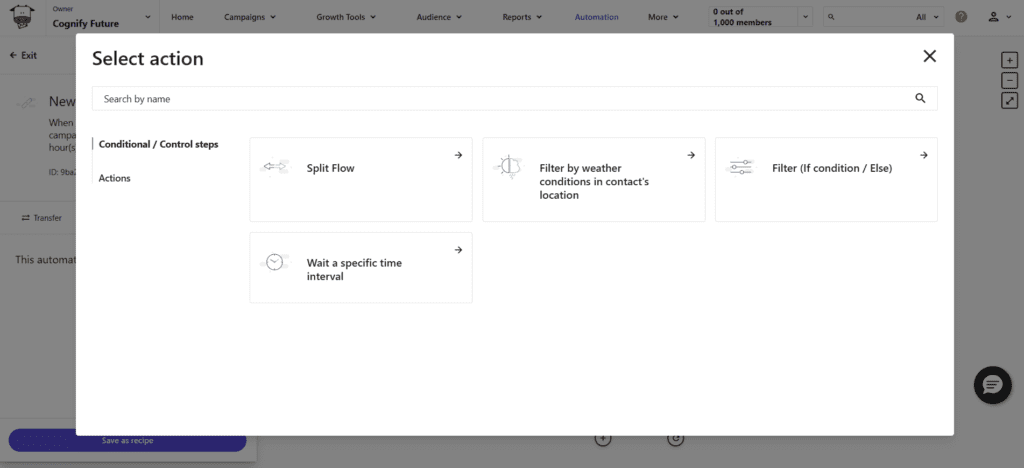
IF user opens email → send follow-up
IF user clicks CTA → sales email
IF user inactive for 15 days → re-engagement email
This is powerful lifecycle marketing. All paid plans include unlimited automation workflows and unlimited email sends, which is a key differentiator — many competitors cap either automation tasks or email volume on lower tiers.
3.Moosend Landing Pages
Landing pages are essential for lead generation, and having them built into the same platform saves you from paying for a separate tool like Unbounce or Leadpages. Moosend’s landing page builder covers the most common use cases: webinar registration, ebook downloads, lead magnets, service consultation, and free trial signups.
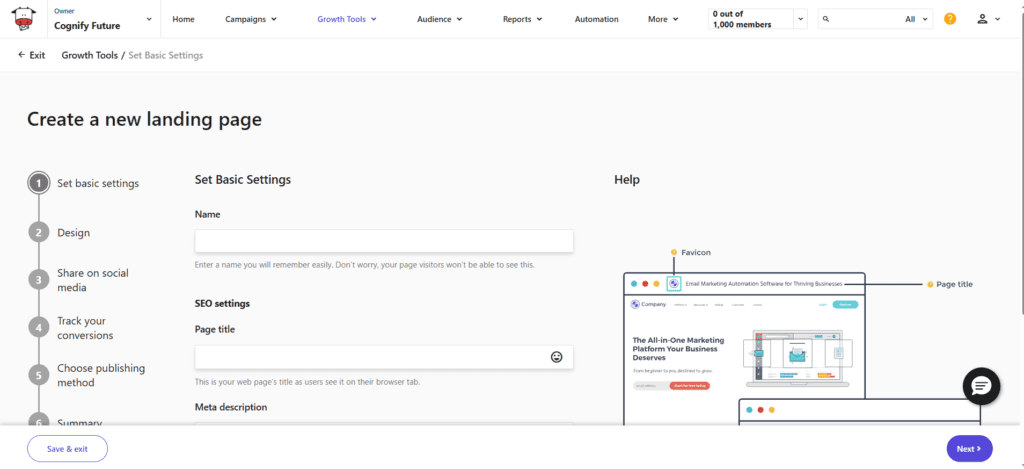
Having this inside the same tool improves workflow efficiency — you can connect a landing page directly to a Moosend list and automation in just a few clicks, with no third-party integration required.
4.Moosend Analytics Dashboard
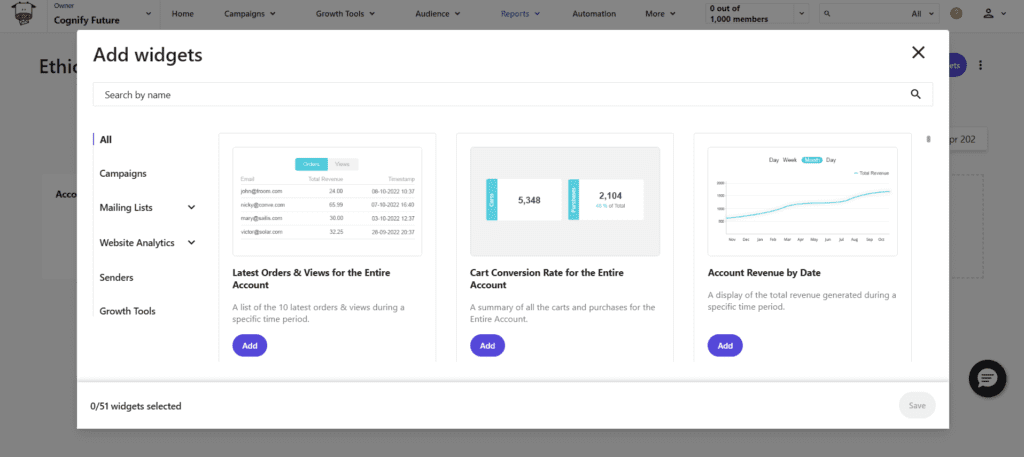
Analytics should answer one question: what is working? Moosend provides clear visibility into open rates, click rates, unsubscribes, bounce rate, conversion trends, revenue generated by campaigns, click maps, and geolocation data. This depth of reporting at the Pro plan price point is impressive — most competitors reserve click maps and revenue tracking for higher-tier plans.
Moosend Pricing
One of the biggest reasons businesses choose Moosend is its budget-friendly pricing structure. Moosend pricing in 2026 is built around a single Pro plan that scales with your contact count, plus a Moosend+ custom add-on tier and an Enterprise plan for large teams. All paid plans include unlimited email sends — which is rare and removes one of the most common cost anxieties in email marketing.
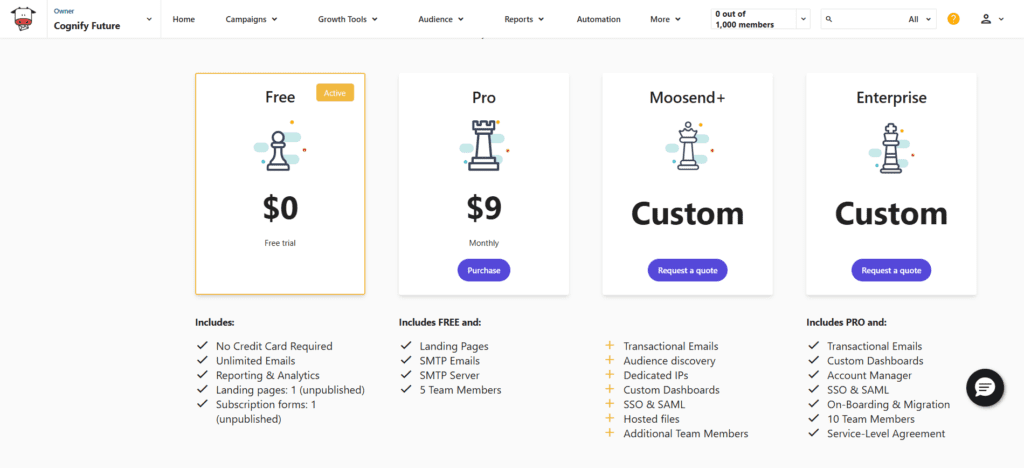
Moosend offers a 30-day free trial with no credit card required, giving you full Pro feature access for up to 1,000 contacts — including the email builder, AI Writer, automations, segmentation, and landing page and form design. This is one of the most generous free trials in the email marketing space.
| Plan | Monthly Price | Annual Price | Best For |
|---|---|---|---|
| Free Trial | $0 (30 days, 1,000 contacts) | — | Testing the platform |
| Pro – 500 contacts | $9/mo | ~$7/mo | Solopreneurs & micro-lists |
| Pro – 2,000 contacts | $24/mo | ~$19/mo | Small businesses |
| Pro – 10,000 contacts | $88/mo | ~$70/mo | Growing ecommerce & SaaS |
| Pro – 50,000 contacts | $315/mo | ~$252/mo | Mid-size businesses |
| Moosend+ / Enterprise | Custom | Custom | Advanced add-ons, SSO, priority support |
Key billing notes for 2026: Moosend offers 20% off on annual billing and 15% off on bi-annual plans. Non-profit organisations receive an additional 25% discount. One important caveat: Moosend removed its permanent free plan — once the 30-day trial ends, you must upgrade or lose access to sending. Your data stays in the account, but campaigns and automations pause until you pay. If a permanent free tier matters to you, MailerLite (up to 1,000 contacts free) or Brevo (unlimited contacts, 300 emails/day free) are better options.
Moosend Pros and Cons
Pros
- easy to use — beginner friendly dashboard
- strong automation with unlimited workflows on all paid plans
- unlimited email sends on every paid plan
- excellent segmentation based on behavior, location, and purchase history
- built-in landing pages and forms
- AI Writer for faster campaign creation
- 4–6x cheaper than major competitors at comparable contact volumes
- contacts counted uniquely across lists (no double billing)
- 30-day free trial, no credit card required
Cons
- no permanent free plan — trial ends after 30 days
- no native SMS, WhatsApp, or push notification channel
- Shopify integration requires a Zapier workaround (WooCommerce and Magento integrate natively)
- smaller template library than Mailchimp
- no built-in CRM for sales pipeline management
- custom pricing for Moosend+ and Enterprise is not transparent upfront
Who Should Buy Moosend?
Best for: startups, SaaS founders, agencies, bloggers, and D2C ecommerce brands. If your main problem is customer retention, cart recovery, lead nurturing, or SaaS onboarding and you want a powerful automation engine at the lowest possible cost, Moosend is a strong fit. It is especially compelling for businesses growing from 500 to 50,000 contacts who cannot yet justify ActiveCampaign or Klaviyo pricing.
Who Should Not Buy Moosend?
Moosend is excellent for many businesses, but it may not be ideal for everyone. You may want to consider alternatives if:
1.You Need Deep CRM Sales Automation
If your sales team heavily depends on pipeline stages, deal tracking, lead scoring, and CRM-driven journeys, a dedicated platform like ActiveCampaign or HubSpot will serve you better. Moosend is email-first and does not include a built-in sales CRM.
2.You Need Multi-Channel Messaging
If your strategy includes WhatsApp, SMS, push notifications, or advanced omnichannel communication inside a single workflow, Moosend is email-only. Brevo (email + SMS + WhatsApp + live chat) or Omnisend (email + SMS + push) are better choices if multi-channel coordination is a priority.
3.Enterprise-Level Customization
Large organizations often require complex permissions, multiple business units, compliance workflows, and custom reporting layers. In such cases, enterprise platforms with dedicated infrastructure and HIPAA compliance may be better.
Moosend vs Mailchimp vs ActiveCampaign: Which One Should You Choose?
Many users search comparison queries before purchase. Here is a detailed, honest breakdown across the dimensions that actually matter — pricing, automation depth, multi-channel, webinars, and CRM — covering points most Moosend reviews skip.
| Platform | Starting Price | Unlimited Sends | Automation Depth | SMS/Multi-channel | Built-in CRM | Best For |
|---|---|---|---|---|---|---|
| Moosend | $9/mo | Yes | Strong | No | No | SMBs, SaaS, ecommerce — best value |
| Mailchimp | ~$13/mo | No | Basic | No | Limited | Beginners, simple newsletters |
| ActiveCampaign | ~$15/mo | Yes | Best-in-class | No | Yes | Advanced automation + sales CRM |
| Brevo | Free / low | No (send-based) | Moderate | Yes (SMS, WA) | Basic | Budget + multi-channel |
| GetResponse | ~$19/mo | Yes | Advanced + funnels | No | No | Webinars + all-in-one funnels |
| Klaviyo | ~$20/mo | No | Advanced | Yes (SMS) | No | High-volume ecommerce stores |
Moosend
Best for startups, agencies, SMBs, SaaS onboarding, and ecommerce workflows. Strongest area: automation + affordability. At $9/month for 500 contacts with unlimited sends and full automation, it is unmatched on price-to-feature ratio. The one structural weakness competitors rarely mention: Moosend has no native Shopify integration and no permanent free plan.
Mailchimp
Read Detailed Mailchimp Review Click Here
Best for beginners and simple newsletter needs. Strongest area: ease of entry. However, Mailchimp’s audience model bills the same contact twice if they appear on two lists — a costly gotcha as your list grows. Automation is more limited than Moosend at comparable price points, and caps on email sends apply even on paid plans.
ActiveCampaign
Read Detailed ActiveCampaign Review Click Here
Best for advanced CRM workflows, sales funnel automation, and enterprise lifecycle journeys. Strongest area: deep sales automation. ActiveCampaign has the most sophisticated automation and CRM of any platform in this range, and deliverability tests consistently rank it at the top of the market. However, it is noticeably pricier than Moosend at scale — the Enterprise plan can cost nearly three times more. Choose ActiveCampaign when your sales workflow is CRM-heavy and you need advanced lead scoring.
My Recommendation
Choose Moosend if your primary goal is lead nurturing, cart recovery, cost efficiency, or customer lifecycle automation — and your budget is the limiting factor. Choose Mailchimp if you only need simple campaigns and a quick start. Choose ActiveCampaign if your sales workflow is CRM-heavy. Choose Brevo if you need email plus SMS or WhatsApp in one platform. Choose GetResponse if webinars and conversion funnels are central to your strategy.
Final Verdict
If I were advising a startup founder, agency owner, or ecommerce business today, I would recommend evaluating Moosend based on one question: What business problem are you trying to solve?
If the problem is lost leads, low customer retention, cart abandonment, inactive subscribers, or poor onboarding conversion — then Moosend is a strong practical fit. It is especially compelling because it delivers automation, segmentation, landing pages, and analytics all in one platform at a price that is 4 to 6 times cheaper than most well-known alternatives at scale.
The biggest strength is not just email sending. It is the ability to build customer journeys that continue working even when your team is offline. Instead of manually chasing every lead, you create a repeatable conversion engine. That is the real business value of Moosend in 2026 — and the 30-day free trial with no credit card means there is very little reason not to test it yourself.
Related Reading
- Best Email Marketing and Automation Tools 2026 (full roundup)
- Best Free Email Marketing Tools 2026
- Best Mailchimp Alternatives 2026
- What Is Email Marketing? Beginner Guide
Is Moosend good for small businesses?
Yes, especially for startups and SMBs. Moosend’s Pro plan starts at $9/month for 500 contacts with unlimited email sends and full automation access, making it one of the most cost-effective options for growing businesses that need professional email marketing without a large budget.
Does Moosend support automation?
Yes — workflow automation is one of Moosend’s strongest features. The visual automation builder supports multi-step, conditional workflows with IF/THEN logic, and all paid plans include unlimited automation workflows and unlimited email sends.
Is Moosend good for ecommerce?
Excellent for abandoned cart recovery, post-purchase sequences, and customer retention workflows. The abandoned cart automation alone can recover a significant portion of lost sales and often pays for the subscription on its own. Note that Shopify integration currently requires a Zapier workaround — WooCommerce and Magento integrate natively.
Can Moosend create landing pages?
Yes. Moosend includes a built-in landing page builder on all paid plans. It supports common use cases including webinar registration, ebook downloads, lead magnets, and service consultations — all connected directly to your Moosend lists and automations without third-party integrations.
Is Moosend beginner friendly?
Yes. The drag-and-drop email and landing page builders, pre-built automation templates, AI Writer, and logical campaign creation flow make Moosend accessible for non-technical users. Most businesses can launch their first campaign within a few hours of signing up.
Is Moosend suitable for SaaS?
Yes. Moosend is well suited for SaaS businesses that need to convert free trial users into paying customers. You can build a complete onboarding automation sequence — welcome email, feature tutorials, social proof, and upgrade CTA — that runs automatically from day one of a user’s trial without any manual effort.
Does Moosend improve conversions?
Yes, when workflows are structured properly. Behavior-based automations, audience segmentation, and targeted sequences all contribute to higher open rates, click-through rates, and conversions compared to sending the same generic email to your entire list.
Is Moosend worth the price?
Strong ROI for businesses using automation effectively. At $9/month for 500 contacts with unlimited sends and full automation, Moosend is 4–6x cheaper than Klaviyo, Mailchimp, and ActiveCampaign at comparable contact volumes. The 30-day free trial with no credit card lets you validate that ROI before committing.





I am Ashish Yadav a software engineer and AI tools researcher with over five years of practical experience working with real-world systems and automation. I am founder of CognifyFuture, where I analyzes, tests, and breaks down AI tools with a focus on what actually works—not what’s trending.
My content is built on hands-on usage, not theory. Instead of generic advice, I focuses on real implementation—how AI tools can be used to automate tasks, improve efficiency, and solve any specific business or individual problems.
Through CognifyFuture, My aims is to eliminate confusion around AI by delivering clear, honest, and actionable insights that help users make smarter technology decisions.