Affiliate Disclosure: This ActiveCampaign review may contain affiliate links. If you sign up through them, I may earn a small commission at no extra cost to you. I only recommend tools I have personally evaluated, and this never influences my honest opinion.
ActiveCampaign is one of the most powerful email marketing and CRM automation platforms available in 2026 — but is it actually worth the investment for your business? That depends on what you’re trying to solve. If you’re dealing with leads going cold, low open rates, poor customer retention, or a sales process that relies too heavily on manual follow-ups, this review will help you figure out whether ActiveCampaign is the right tool — or whether a cheaper alternative would serve you just as well.
This isn’t a feature tour. It’s a practical, problem-first guide that shows how businesses actually use ActiveCampaign to close more leads and retain more customers — with the honest pricing breakdown, real use cases, and a full competitor comparison most reviews skip.
What is ActiveCampaign?
ActiveCampaign is a powerful email marketing, CRM, and automation platform designed to help businesses automate customer journeys, nurture leads, and improve conversions. It’s used by over 185,000 businesses across more than 170 countries, and it consistently ranks at or near the top of independent deliverability tests. What sets it apart from most email tools is the combination of deep automation and a built-in CRM — two things that usually require separate subscriptions.
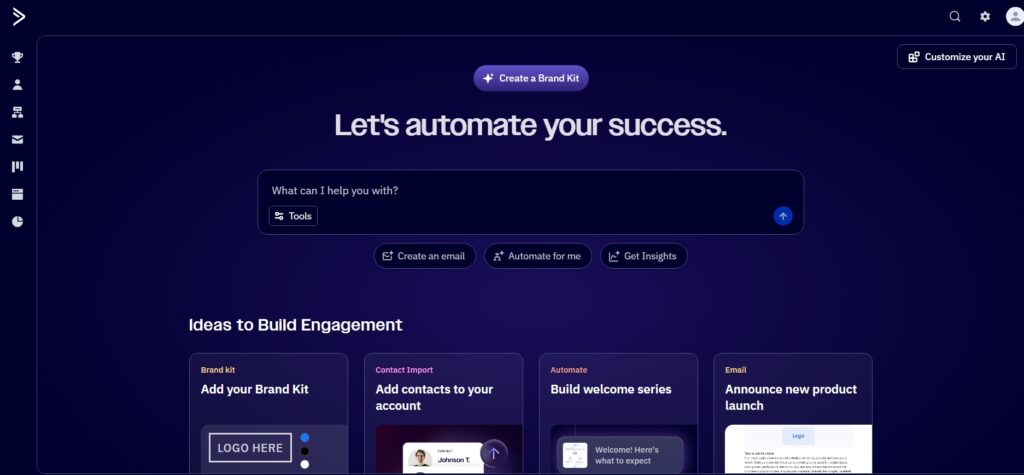
The platform combines email marketing, a sales CRM, workflow automation, AI personalization, landing pages, SMS campaigns, lead scoring, and customer segmentation in a single dashboard. It’s especially known for its advanced automation workflows and CRM integration — which is the core reason businesses choose it over simpler tools like Mailchimp or Moosend.
The Biggest Problems Businesses Face That ActiveCampaign Solves
Read Best Email Marketing and Automation Tools for 2026 – Top 10 Platforms Tested Click Here
Problem 1 – Leads Go Cold Too Quickly
One of the biggest challenges businesses face is losing leads after first contact. A user downloads your ebook today, and if you don’t follow up within 24–48 hours, their interest drops fast. Most businesses know this is happening but don’t have a system to fix it. That’s exactly where ActiveCampaign earns its place.
Practical Use Case – How to Solve This.
The moment a user downloads your lead magnet, ActiveCampaign can automatically trigger a full nurture sequence without any manual effort on your part.
Workflow
- Instant welcome email
- Day 1 product education email
- Day 3 testimonial email
- Day 5 offer email
- Day 7 sales call CTA
This entire flow runs automatically through automation journeys. You set it up once, and it works for every lead that enters the system going forward.
Problem 2 – Low Email Open Rates
Most businesses send emails at arbitrary times — whatever’s convenient for the sender, not the recipient. This directly hurts open rates. ActiveCampaign addresses this with predictive sending, AI timing optimization, and behavior analysis. In practice, this means each subscriber receives emails at the time they are statistically most likely to open them, based on their past engagement patterns. It’s a small detail that compounds significantly across a large list.
Problem 3 – Poor Customer Retention
Customer acquisition is expensive — retention is where the real profit lives. ActiveCampaign helps by automating re-engagement emails, abandoned cart recovery, renewal reminders, and personalized upsells. Once these flows are live, they run without your team lifting a finger, which means you’re retaining customers even while you sleep.
Practical Real-World Use Cases of ActiveCampaign
Use Case 1 – Ecommerce Sales Automation
Suppose you run an ecommerce store and a customer adds a product to their cart but doesn’t complete the purchase. Without automation, that sale is lost. With ActiveCampaign, you can build a recovery sequence that feels personal rather than spammy.
ActiveCampaign workflow
- 1-hour reminder email — warm, casual, no pressure
- 24-hour discount offer — give them a reason to return
- 48-hour urgency email — limited stock or time-sensitive framing
- 72-hour testimonial email — social proof to overcome final hesitation
This flow recovers lost revenue automatically and is one of the highest-ROI workflows any ecommerce brand can build. The 4-email structure is more thorough than what most competitors offer out of the box.
Use Case 2 – SaaS Lead Nurturing Funnel
For SaaS businesses, not every lead converts immediately — and that’s normal. The problem is most SaaS companies don’t have a structured process for the gap between free signup and paid conversion. ActiveCampaign fixes this with a full onboarding and nurture funnel: free signup, onboarding sequence, feature education emails, a case study, and then a sales demo CTA. This structured approach significantly improves trial-to-paid conversion rates by keeping the lead warm and progressively building confidence in the product.
How I Would Use ActiveCampaign in a Real Business Workflow
Let me make this concrete. Imagine you run a SaaS product, coaching business, or ecommerce store. A visitor finds you through Google, reads a blog post, and downloads a free guide or signs up for a free trial. That moment of interest is your window — and most businesses let it close without acting. The lead is warm right now, but without a timely follow-up, interest fades within days. ActiveCampaign lets you build a workflow that behaves like a well-trained sales team, following up at exactly the right intervals with exactly the right message.
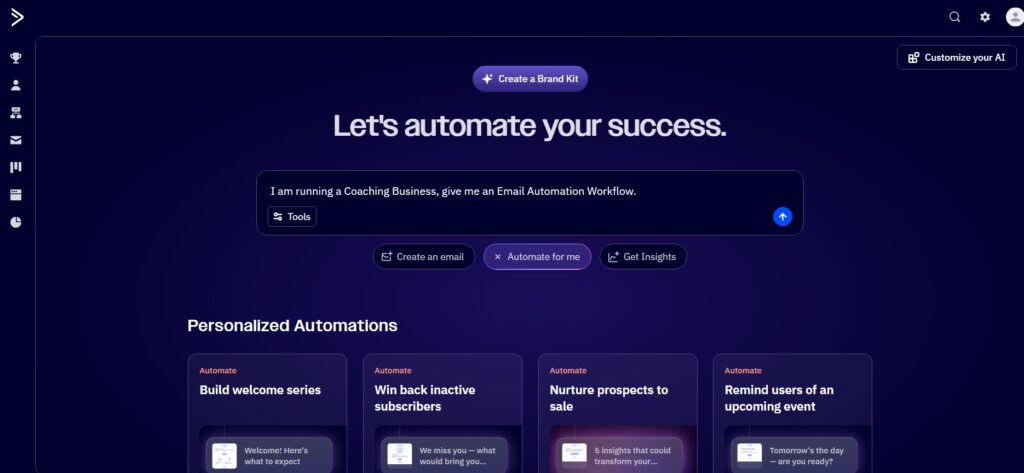
Example: Lead Nurturing Sequence
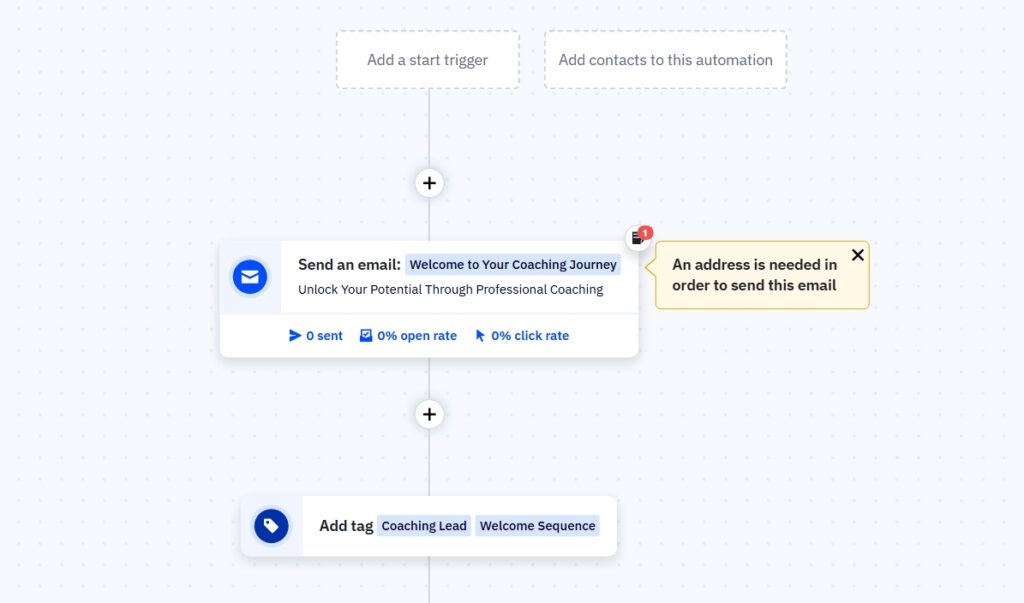
The moment someone signs up, the automation starts. Here’s how each step is designed to move the lead forward.
Day 0 – Instant Welcome Email
This email should feel helpful and human — not like a marketing blast. Keep it simple: deliver the promised resource, give a brief overview of how you help people solve the problem they just expressed interest in, and make it easy to take one small next step. The goal at this stage is trust, not conversion.
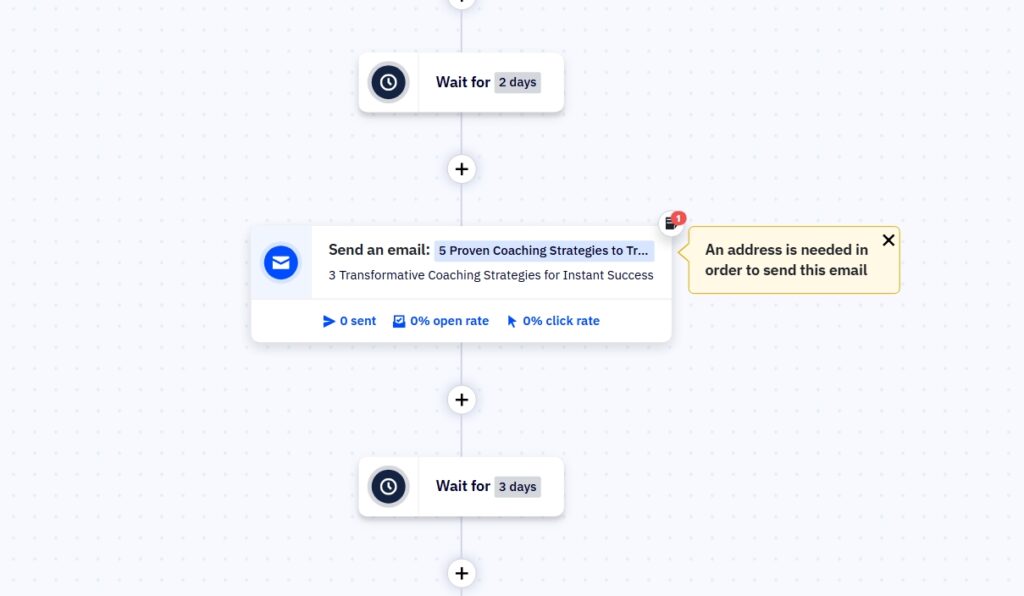
Day 1 – Problem Education
On day one, the lead is still engaged and curious. This is the ideal moment to educate them about the underlying pain point — why most businesses lose leads, the common mistakes people make, and what a better approach looks like. When you write this email well, the reader feels understood rather than sold to, which is exactly the emotional state that leads to a demo request or purchase down the line.
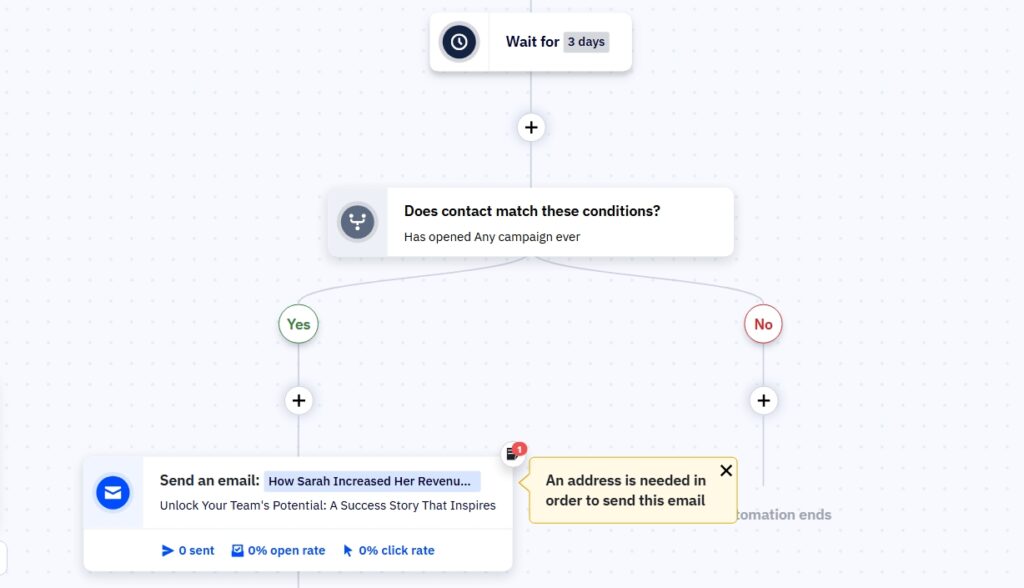
Day 3 – Social Proof
By day three, the lead has had time to think. Trust becomes the deciding factor at this stage. A well-chosen case study or customer success story — with specific, measurable outcomes — does more heavy lifting here than any sales copy could. Something like “how one agency recovered significant abandoned cart revenue using automation” makes the solution feel real and achievable, not theoretical.
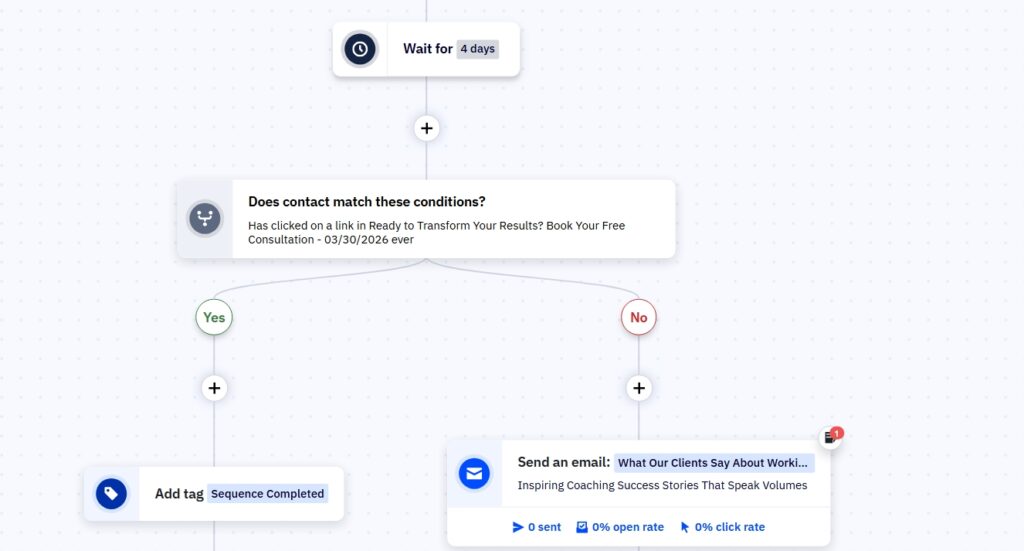
Day 5 – Offer Email
By day five, the lead has received enough context to evaluate your offer. This is when you introduce a free demo, product trial, time-limited discount, or consultation call. Because the previous emails built trust and educated the lead rather than pushing for a sale, this offer lands as a natural next step rather than a hard sell. That’s what makes the sequence work — the sequence earns the right to make the ask.
A Practical Ecommerce Use Case That Actually Increases Revenue
Cart abandonment is one of the most expensive and overlooked problems in ecommerce. A customer visits your product page, adds an item to their cart, and then leaves — this happens dozens or hundreds of times every day in most online stores, and without automation, the vast majority of those sales are simply lost. ActiveCampaign’s abandoned cart recovery workflow changes that equation.
Abandoned Cart Recovery Workflow
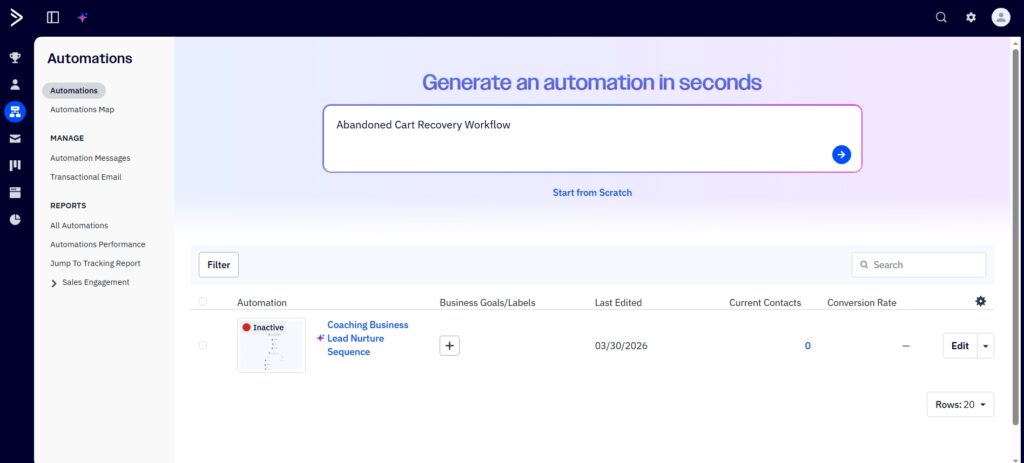
After 1 Hour
Send a casual, low-pressure reminder — “Hey, you left something in your cart.” This simple nudge alone recovers a meaningful percentage of abandoners, particularly those who left because of a distraction rather than genuine hesitation.
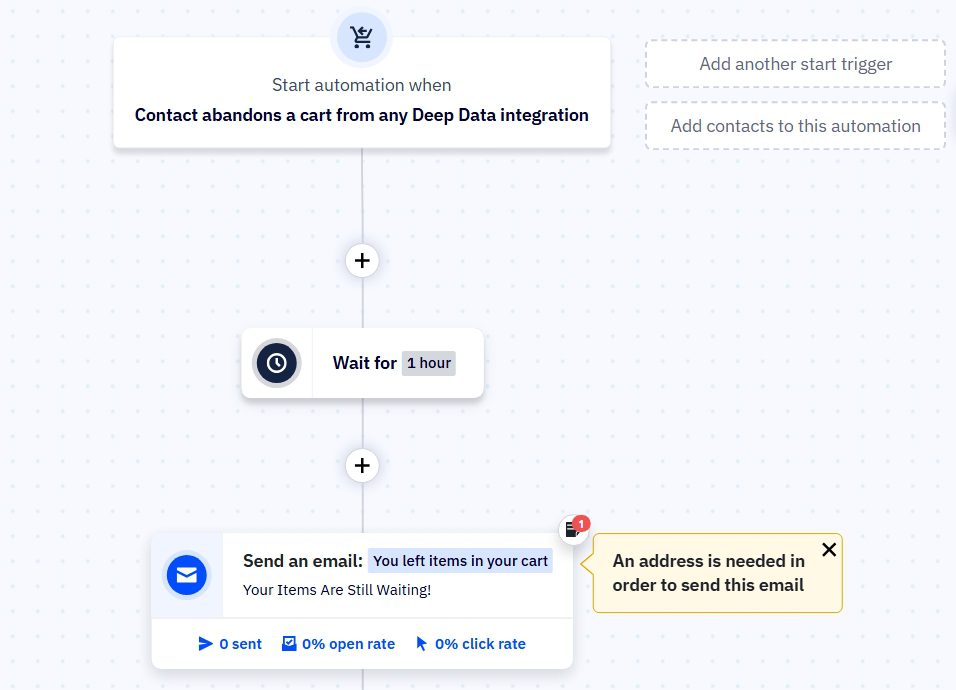
After 24 Hours
For leads who didn’t respond to the first email, introduce a layer of urgency — something like “your selected item is selling fast.” This creates natural FOMO without being manipulative, particularly when it’s accurate.
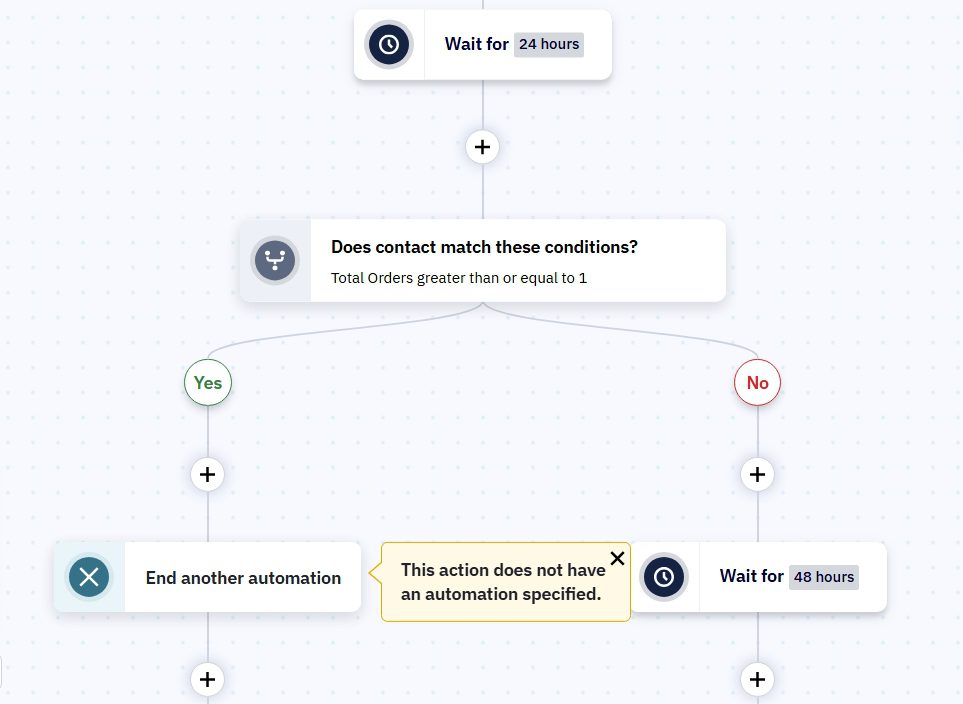
After 48 Hours
Now offer an incentive — a 10% discount, free shipping, or a bonus item. This email often pushes undecided buyers across the line, especially when the incentive feels like a genuine reward rather than a desperate discount.
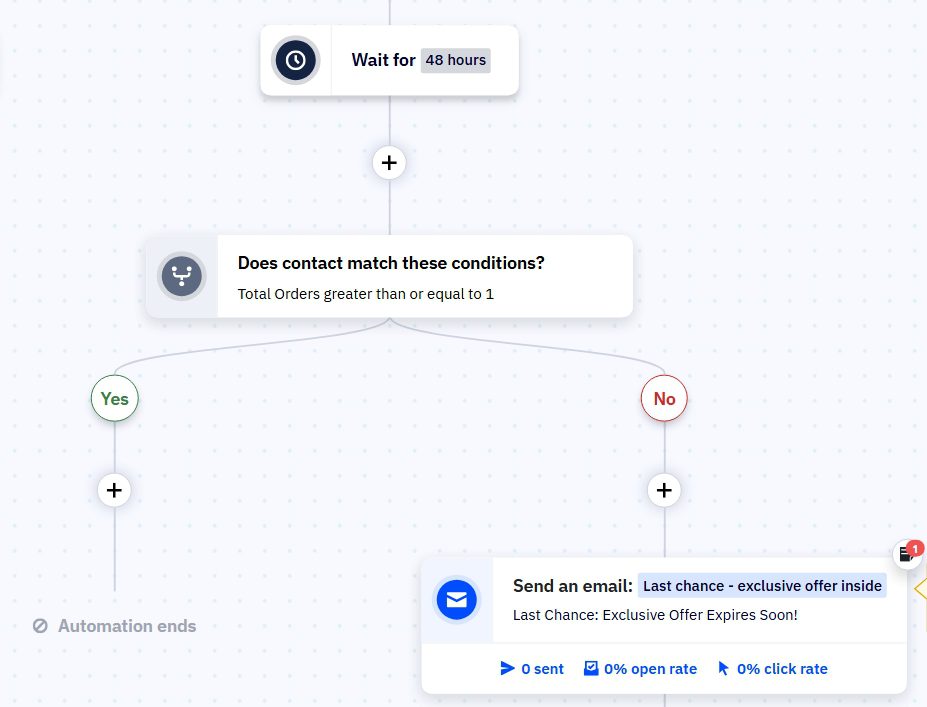
After 72 Hours
Close the sequence with social proof — “See why 5,000+ customers love this product” — backed by real reviews and testimonials. At this stage, the remaining hesitation is usually about trust rather than price, so customer evidence is the most effective lever you have.
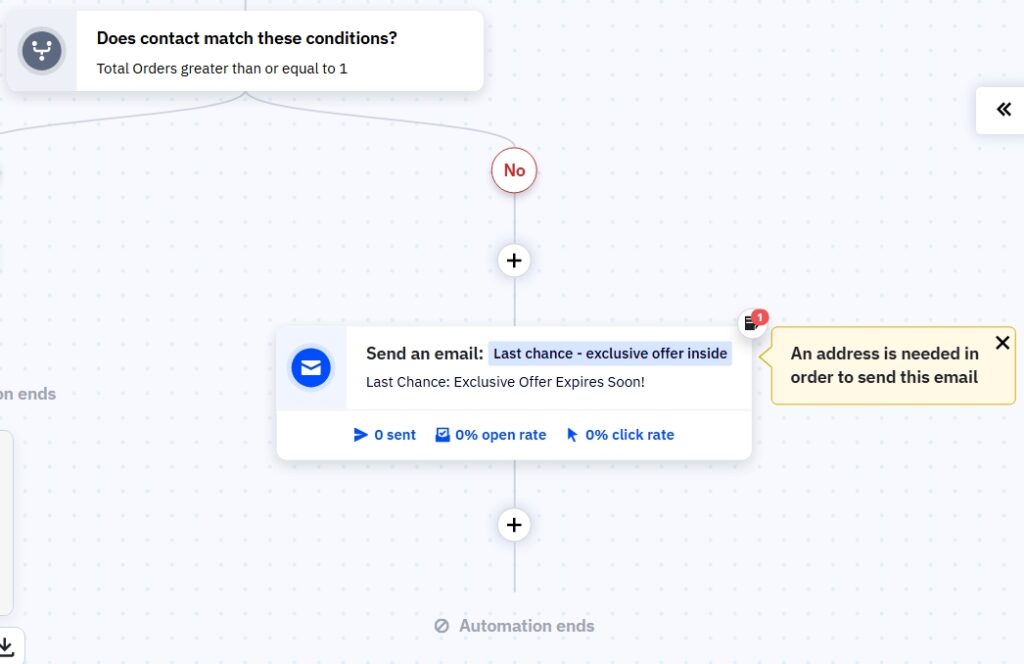
This four-email sequence mirrors how a skilled salesperson would naturally follow up — which is exactly why it works. The automation removes the need for anyone on your team to do this manually, at any scale.
How ActiveCampaign Helps Small Teams Work Like a Bigger Company
One of the most underrated benefits of ActiveCampaign is what it does for small teams. When a founder is managing marketing, sales, customer support, and follow-ups simultaneously, things inevitably fall through the cracks. Some leads get timely responses, others don’t hear back for days, and some customers never receive any follow-up after signup. That inconsistency is a direct revenue leak.
ActiveCampaign creates the process layer that makes consistency possible. When someone fills out your contact form, the platform can instantly send a confirmation email, notify your sales team via Slack or email, create a CRM lead with the relevant data, assign a follow-up pipeline stage, and schedule reminder tasks — all without anyone touching a keyboard. Instead of relying on memory or spreadsheets, everything becomes process-driven. That’s how a three-person team operates with the responsiveness of a much larger organisation.
Mistakes to Avoid While Using ActiveCampaign
Mistake 1 – Too Many Emails
A common mistake is treating automation as a licence to send more emails. More frequency doesn’t equal more revenue — in fact, over-emailing erodes trust and drives unsubscribes quickly. The better approach is to focus on relevance and timing rather than volume. Each email in your sequence should earn its place by delivering genuine value to the reader at that specific stage of their journey.
Mistake 2 – Sending Same Email to Everyone
A new lead who just downloaded a free guide has completely different needs and expectations than a paying customer who’s been with you for six months. Sending the same message to both groups not only wastes the opportunity — it actively damages the relationship with the customer who already trusts you. ActiveCampaign’s segmentation tools exist precisely to solve this. Use them. Separate your new subscribers, free trial users, paid customers, and inactive contacts, and build distinct communication tracks for each.
Mistake 3 – No Follow-Up Optimization
Automation is not a “set and forget” system. The best results come from treating it as an ongoing experiment. Review your open rates, click rates, conversion rates, and drop-off points at each step of every sequence at least once a month. A subject line change or a reordered step can meaningfully improve performance. ActiveCampaign’s reporting makes this straightforward — use it.
Before vs After Using ActiveCampaign: A Practical Business Example
To understand whether ActiveCampaign is actually worth it, consider a simple real-world scenario. You run a small SaaS product or service business. Each week, around 40–50 people visit your pricing page and 10–15 download your free guide. On paper, this looks like promising traffic. The real question is how many of those visitors actually convert into paying customers — and what the gap looks like before and after implementing automation.
Without automation, the typical pattern is this: a visitor signs up for a free resource, receives one welcome email, and then hears nothing for days. By the time you manually remember to follow up, the lead is already cold. Meanwhile, some of those visitors are returning to your website multiple times, showing real buying intent — but without a system to detect and respond to that behaviour, you never know who they are.
The Customer Journey After Automation
With ActiveCampaign, the moment a user downloads your guide or starts a free trial, an automation workflow begins immediately. The first email goes out with the promised resource. Within 24 hours, a follow-up arrives that addresses the specific problem the lead expressed interest in. If the lead then opens that email and clicks through to your pricing page, ActiveCampaign flags that behaviour as buying intent and automatically triggers the next step — sending a case study, offering a demo, sharing customer testimonials, or alerting your sales team. The lead feels nurtured rather than sold to, which is what actually moves them toward a decision.
Why ActiveCampaign Matters in Practical Terms
The revenue impact of fixing your follow-up process is often larger than people expect. If you’re currently converting 1 out of 20 leads per week, and a structured nurture sequence improves that to 3 conversions, the difference compounds quickly. For a service business with an average client value of $500, that’s the difference between $500 and $1,500 per week from the same traffic — without spending anything extra on acquisition. That’s why growth-focused businesses treat ActiveCampaign as a revenue optimization platform rather than simply an email tool.
ActiveCampaign Key Features That Actually Matter
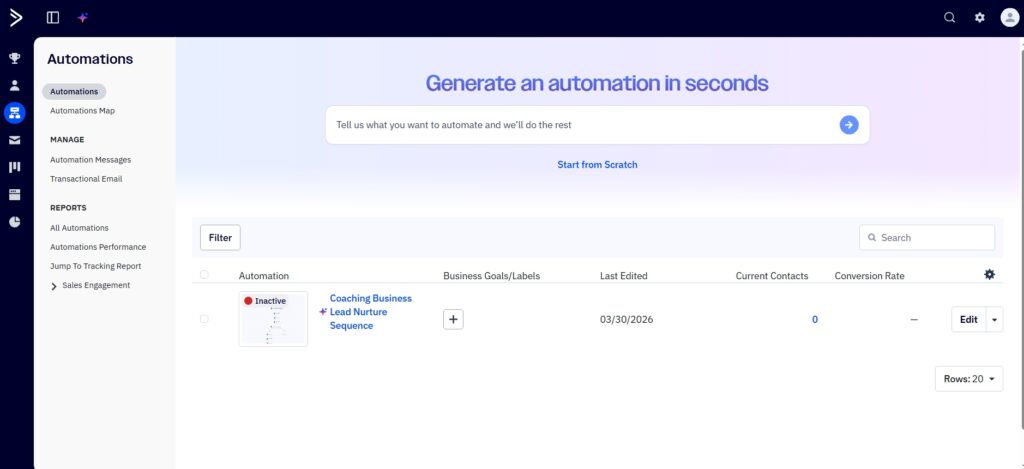
1.Advanced Automation
This is ActiveCampaign’s defining strength and the primary reason businesses choose it over cheaper alternatives. The visual automation builder lets you create multi-step, conditional workflows triggered by clicks, email opens, purchases, website visits, inactivity, or custom events. With 900+ pre-built automation templates, you can deploy proven workflows — welcome sequences, abandoned carts, re-engagement campaigns — in minutes and then customise from there. The depth of branching logic available at every price tier is significantly greater than what you’ll find in Mailchimp, Moosend, or Brevo.
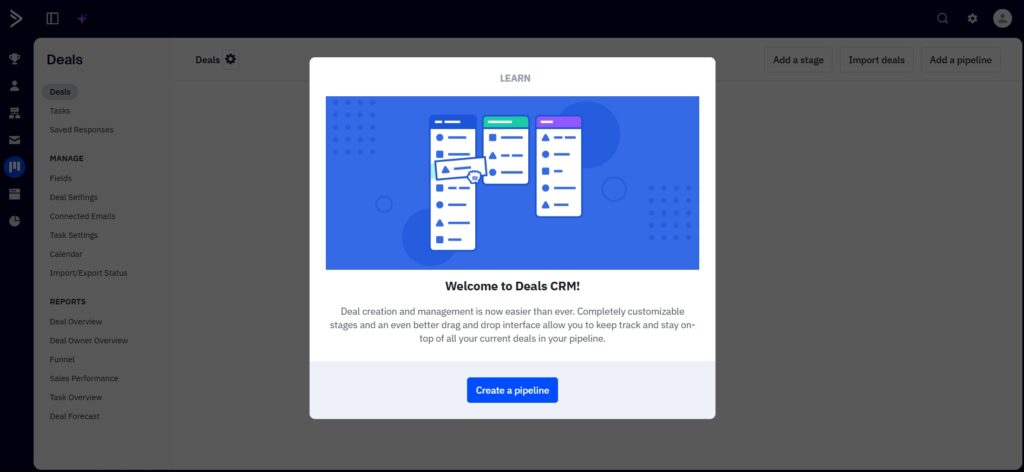
2.Built-in CRM
Unlike almost every other email marketing platform, ActiveCampaign includes a real CRM — pipeline management, deal tracking, contact scoring, and task assignment — either built in or available as an enhanced add-on. For small sales teams that don’t want to pay for a separate CRM like Salesforce or Pipedrive, this is a genuine differentiator. It bridges the gap between marketing and sales in a way that tools like Moosend or GetResponse simply don’t, because those platforms are email-first with no CRM layer at all.
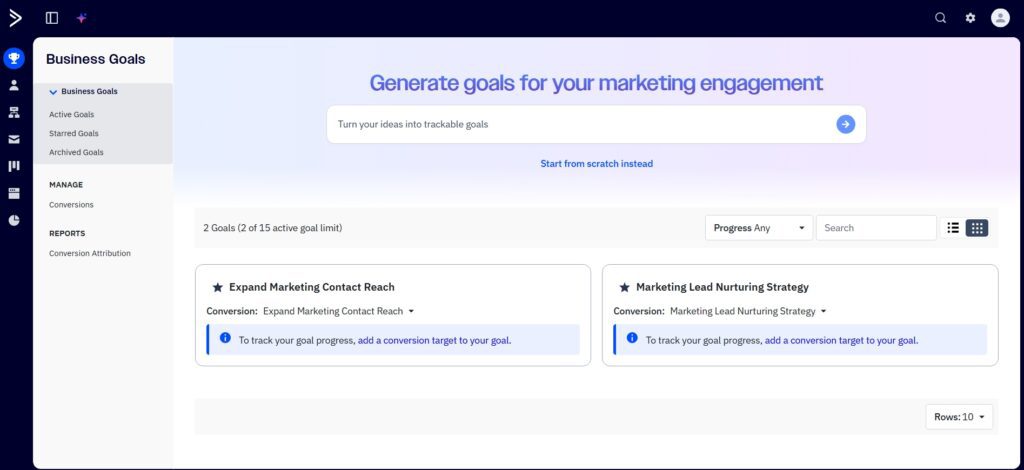
3.AI Personalization
ActiveCampaign has expanded its AI capabilities significantly in 2026. Current features include AI-assisted email content creation, suggested segmentation based on contact behaviour, predictive send times that optimise delivery for each individual subscriber, and workflow recommendations that suggest automations based on your account data. These aren’t gimmicks — predictive sending in particular has a measurable positive impact on open rates when applied to a sufficiently large list.
ActiveCampaign vs Mailchimp
The most common comparison people make. Mailchimp is easier to start with and has a free tier — but its automation is significantly shallower than ActiveCampaign’s, and its audience model charges you twice if the same contact appears on two lists. ActiveCampaign has no permanent free plan, but what you get at $15/month (annual) is a far more capable system for anyone who needs real automation rather than basic newsletters.
ActiveCampaign
Best for automation, CRM, lead scoring, and advanced sales funnels. The better choice for any business with a structured follow-up process or a sales team that needs CRM data alongside marketing.
Mailchimp
Best for beginners, simple newsletters, and small lists that don’t need complex automation. The free tier is genuinely useful for getting started, but the value gap widens quickly as your needs grow.
Winner:
For serious business growth → ActiveCampaign. For beginners who only need simple campaigns → Mailchimp.
ActiveCampaign Pricing – Is It Worth It?
ActiveCampaign pricing in 2026 uses a tiered, contact-based model across four plans. The cost rises with both the plan tier and contact count, and there is no permanent free plan — only a 14-day free trial that gives you access to Professional-level features. Annual billing saves approximately 20% compared to monthly rates.
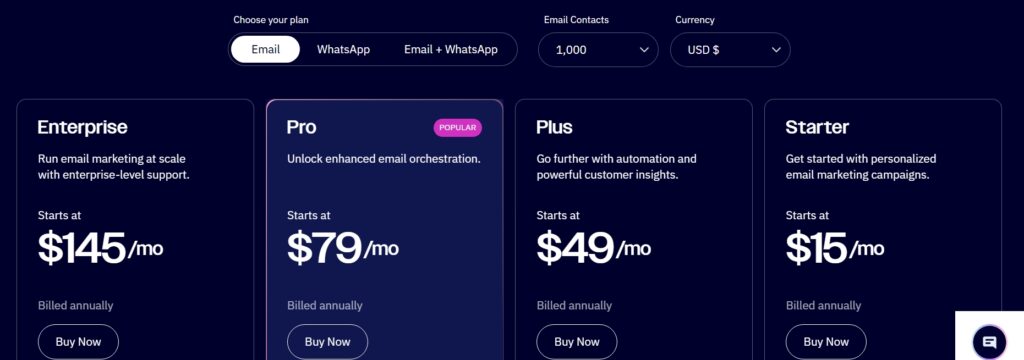
| Plan | Annual Price (1,000 contacts) | Monthly Price (1,000 contacts) | Key Features Unlocked |
|---|---|---|---|
| Starter | $15/mo | $19/mo | Email marketing, basic automation, 1 user |
| Plus | $49/mo | $59/mo | CRM, lead scoring, landing pages, SMS add-on |
| Professional | $79/mo | $99/mo | Predictive sending, attribution, split automation |
| Enterprise | $145/mo | $179/mo | Custom reporting, dedicated IP, SSO, unlimited users |
A few honest caveats that most ActiveCampaign reviews gloss over. First, the Starter plan does not include the CRM, landing pages, or SMS — those features require Plus or higher, making Plus the realistic entry point for most businesses that want the full platform. Second, the price scales sharply as your list grows: a Starter plan jumps from $15/month at 1,000 contacts to roughly $125/month at 25,000 contacts. Third, CRM pipelines, transactional email, and custom reporting are available as paid add-ons that can increase your total bill by 30–50% beyond the headline plan price. Budget for those if you need them. Finally, ActiveCampaign has increased prices by roughly 50–100% on entry-tier plans since 2021, so it’s worth factoring in 10–15% annual increases when planning longer-term costs.
That said, if automation helps you close even two extra customers per month, the platform typically pays for itself many times over. The ROI calculation depends entirely on your average customer value.
For a full competitor comparison, here’s how ActiveCampaign stacks up against the main alternatives in 2026:
| Platform | Starting Price | Automation Depth | Built-in CRM | Deliverability | Best For |
|---|---|---|---|---|---|
| ActiveCampaign | $15/mo (annual) | Best-in-class | Yes (Plus+) | Top-rated | Automation + sales CRM |
| Mailchimp | Free / ~$13/mo | Basic | Limited | Good | Beginners, newsletters |
| Moosend | $9/mo | Strong | No | Good | Budget + automation |
| GetResponse | ~$19/mo | Advanced + funnels | No | Good | Webinars + all-in-one |
| Brevo | Free / low-cost | Moderate | Basic | Good | Multi-channel + budget |
| HubSpot | High | Enterprise | Full CRM suite | Excellent | Large sales teams |
Who Should Buy ActiveCampaign?
ActiveCampaign is a strong fit for bloggers, SaaS companies, ecommerce stores, agencies, coaches, small businesses, and startups — particularly those that already have leads coming in and need a better system for converting them. It’s especially well suited for businesses with a structured sales process, where having CRM data and email automation in the same platform reduces friction between marketing and sales teams. If automation is central to your growth strategy, this is one of the most capable platforms available at its price range.
Who Should Avoid ActiveCampaign ?
ActiveCampaign is not the right choice for everyone. If you have a very small list and only need occasional newsletters, a simpler tool like MailerLite or Moosend will serve you better at a fraction of the cost. If you want multi-channel communication including SMS and WhatsApp in a single workflow, Brevo is the more practical option. And if your list is growing fast and budget is a serious constraint, Moosend’s $9/month Pro plan covers the core email and automation needs at a significantly lower cost than ActiveCampaign’s Plus plan. The platform’s value is highest when you’re actively using the automation and CRM depth it offers — if you’re not using those features, you’re paying a premium you don’t need.
Final Verdict – Is ActiveCampaign Worth It?
Yes — if your goal is growth through automation and you need a platform that can handle both email marketing and sales pipeline management without juggling multiple tools. ActiveCampaign consistently earns its reputation as one of the best platforms for email marketing, lead nurturing, customer retention, CRM workflow automation, and sales funnel optimisation. The deliverability is among the best in the market, the automation depth is unmatched at this price range, and the CRM integration is a genuine differentiator for businesses with an active sales team.
The honest downside is that it’s not cheap at scale, the Starter plan is too limited for most real use cases, and the add-on structure means your actual bill can be 30–50% higher than the headline price. Go in with clear expectations about which plan you’ll actually need — almost certainly Plus or Professional — and budget accordingly. If you do, ActiveCampaign can deliver strong ROI for almost any lead-driven business.
Related Reading
- Best Email Marketing and Automation Tools 2026 (full roundup)
- ActiveCampaign vs GetResponse
- GetResponse Review 2026
- What Is Email Marketing Automation?
Is ActiveCampaign good for beginners?
It’s usable by beginners, but it’s best suited for intermediate to advanced users who want to get serious about automation. The Starter plan is simple enough to learn quickly, but the features that make ActiveCampaign worth its price — CRM, lead scoring, predictive sending — sit on the Plus and Professional plans and take time to configure well. If you’re completely new to email marketing, Moosend or MailerLite are gentler starting points.
Is ActiveCampaign better than Mailchimp?
For automation and CRM, yes — clearly. ActiveCampaign’s automation depth, lead scoring, and CRM capabilities are significantly more advanced than Mailchimp’s. Mailchimp has a free plan and a simpler interface, which makes it better for beginners or anyone who only needs basic newsletters. But for businesses with a real follow-up process and a growing contact list, ActiveCampaign delivers substantially more value.
Does ActiveCampaign have CRM?
Yes. A marketing CRM is included on all plans. An enhanced sales CRM with pipeline management, deal tracking, and advanced automation is available as a paid add-on on Plus, Professional, and Enterprise plans. This makes ActiveCampaign one of the very few email platforms that can genuinely serve as a primary CRM for small to mid-sized businesses.
Is ActiveCampaign worth the price?
For lead-driven businesses, yes — particularly when you factor in the ROI of improved conversion rates from automation. The key is being realistic about which plan you’ll need. The Starter plan at $15/month is too limited for most real use cases; Plus at $49/month is the realistic entry point. Also budget for potential add-ons like the enhanced CRM or custom reporting, which can increase your total bill by 30–50%.
Can bloggers use ActiveCampaign?
Yes, especially for building lead magnet funnels, newsletter sequences, and affiliate marketing workflows. Bloggers who are serious about monetising their audience through email will find ActiveCampaign’s automation capabilities genuinely useful. That said, for bloggers who only need a newsletter tool, simpler options like MailerLite or Kit (ConvertKit) offer better value at lower price points.
Is ActiveCampaign good for ecommerce?
Yes — abandoned cart workflows, post-purchase sequences, product recommendations, and re-engagement automations are all strong in ActiveCampaign. It integrates natively with Shopify, WooCommerce, and BigCommerce. For high-volume ecommerce stores, Klaviyo is often the specialist alternative, but ActiveCampaign is a strong all-rounder for businesses that want email, automation, and CRM in a single platform.
Does ActiveCampaign support AI?
Yes. As of 2026, ActiveCampaign includes AI-powered email content creation, predictive send time optimisation, suggested segmentation, and workflow recommendations based on your account data. Predictive sending in particular has a measurable impact on open rates for lists above a few thousand contacts.
What is the best alternative to ActiveCampaign?
It depends on what you need. For budget-conscious users who need solid automation without a CRM, Moosend at $9/month is the best value alternative. For webinars and all-in-one marketing funnels, GetResponse is a strong option. For multi-channel campaigns including SMS and WhatsApp, Brevo is the better fit. For enterprise-level sales automation, HubSpot is the natural step up. For beginners who only need newsletters, Mailchimp or MailerLite are the simplest starting points.





I am Ashish Yadav a software engineer and AI tools researcher with over five years of practical experience working with real-world systems and automation. I am founder of CognifyFuture, where I analyzes, tests, and breaks down AI tools with a focus on what actually works—not what’s trending.
My content is built on hands-on usage, not theory. Instead of generic advice, I focuses on real implementation—how AI tools can be used to automate tasks, improve efficiency, and solve any specific business or individual problems.
Through CognifyFuture, My aims is to eliminate confusion around AI by delivering clear, honest, and actionable insights that help users make smarter technology decisions.