Disclosure: This comparison is independent and not sponsored by any of the platforms reviewed. All assessments are based on personal testing and publicly available information.
Most people evaluating ChatGPT, Gemini, and Claude share the same underlying question: not which one scores best on benchmarks, but which one will actually make their specific work faster, better, or easier. The three tools have converged significantly in capability since 2023 — all are genuinely powerful, all have free tiers, and all cost $20/month at the standard paid tier. The differences that matter are in the details: what each does distinctively well, where each has real limitations, and which type of user gets the most value from each.
This comparison covers all three platforms across conversation quality, content writing, coding, document analysis, safety, and pricing — with verified 2026 numbers that reflect significant changes across all three platforms in the past six months.
Understanding the Three Leading AI Models
Each of the three major AI assistants was built with a different primary philosophy — and those foundational differences shape everything from conversation tone to what tasks each handles best.
ChatGPT — The Most Versatile AI Assistant
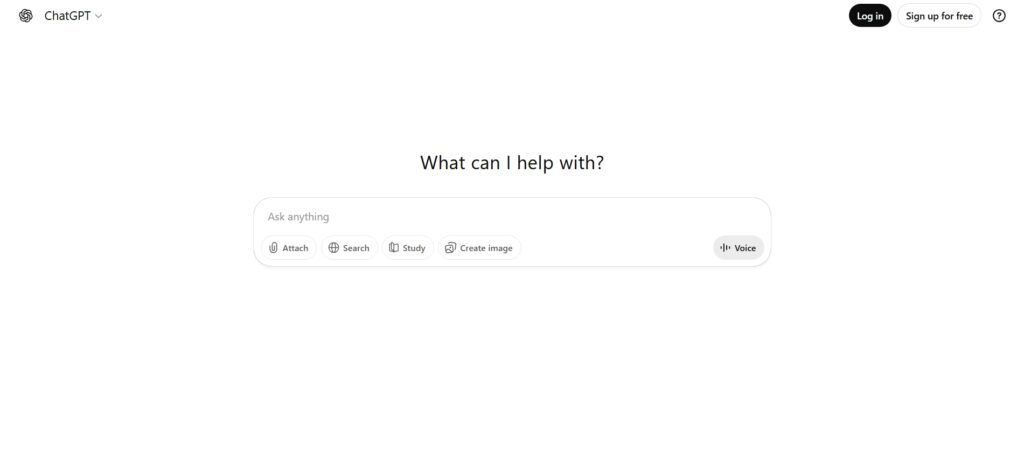
ChatGPT is developed by OpenAI and is the most-used AI assistant globally, with over 400 million weekly active users as of early 2026. OpenAI’s design philosophy has always prioritised breadth — ChatGPT is designed to handle the widest possible range of tasks competently rather than excelling at any single category. The result is an AI that feels remarkably natural to interact with, adapts tone and register fluidly, and covers the full spectrum from casual conversation to technical problem-solving, creative writing, data analysis, and code generation.
The current flagship model — GPT-5.2 as of mid-2026 — is significantly more capable than earlier versions, with improved reasoning, better factual accuracy, and native multimodal capabilities (text, images, voice, and file analysis). ChatGPT’s ecosystem is also the broadest: the GPT Store, memory features, custom instructions, web search, code execution, and DALL-E image generation are all accessible within the same interface.
Gemini — Google’s Multimodal and Data-Driven AI
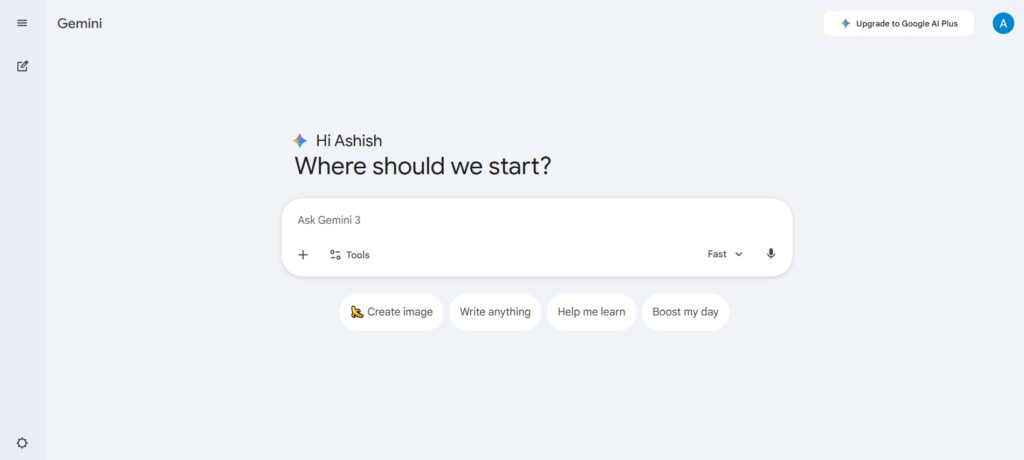
Gemini is Google’s AI assistant, built on the Gemini model family (Gemini 3 as of mid-2026) and designed around two core strengths: deep integration with Google’s ecosystem and the largest available context window in consumer AI. Gemini’s integration with Google Workspace — Docs, Sheets, Gmail, Meet, Drive — is unmatched. If your work lives inside Google’s tools, Gemini’s ability to read your emails, summarise your documents, and generate content directly within those applications adds a layer of workflow integration that neither ChatGPT nor Claude match.
In 2026, Google rebranded its paid AI tiers: “Gemini Advanced” became “Google AI Pro” ($19.99/month) and a new “Google AI Ultra” tier launched at $249.99/month. The rebrand reflects Google’s positioning of AI as a platform-wide capability rather than a standalone chatbot. Gemini 3 Pro offers a 1 million token context window — the largest available in consumer AI, enabling analysis of extremely long documents, entire codebases, or multiple research papers simultaneously.
Claude — Safety-Focused AI with Long-Context Capability
Claude is developed by Anthropic, a safety-focused AI company founded by former OpenAI researchers. Anthropic’s foundational philosophy — Constitutional AI, designed to make models helpful, harmless, and honest — shapes Claude’s character in ways that are immediately noticeable in use. Claude tends to give more nuanced, carefully qualified answers than the other two, is more likely to acknowledge uncertainty or limitation, and produces notably well-structured long-form writing.
The Claude 4 model family (Claude Opus 4 and Claude Sonnet 4.6, current as of June 2026) has significantly closed the capability gap with GPT-5.2 on coding and reasoning tasks, while maintaining Claude’s distinctive strengths in document analysis, extended context conversations, and high-quality prose. Claude’s 200K token context window (approximately 150,000 words) is sufficient for complete books, lengthy contracts, or large codebases — making it the tool of choice for professionals who regularly work with long documents.

Feature-by-Feature Comparison
1. Conversation Quality and Reasoning
ChatGPT
ChatGPT’s conversational quality is the standard against which the others are measured — natural, engaging, and highly adaptable. It shifts register seamlessly from casual to professional, picks up on conversational context quickly, and maintains coherence across long exchanges. GPT-5.2’s reasoning improvements mean it handles multi-step logical problems, ambiguous prompts, and open-ended questions with noticeably better accuracy than previous versions. For most everyday AI use cases — brainstorming, research assistance, explanation, summarisation — ChatGPT’s conversation quality is the benchmark.
Gemini
Gemini’s conversation style is more structured and information-focused than ChatGPT’s. It is precise and factual, with a strong tendency to present balanced perspectives and acknowledge limitations — but it feels slightly more like interacting with a search engine than a conversational partner. Where Gemini distinguishes itself is in reasoning tasks requiring real-time information access and multimodal inputs: analysing an uploaded image alongside a text question, or answering a query that benefits from current web search results integrated into the response.
Claude
Claude’s conversation quality is characterised by unusual consistency across very long interactions. Where ChatGPT and Gemini can occasionally lose the thread in a 30-turn conversation, Claude maintains coherence and remembers details from much earlier in the exchange reliably. Claude’s responses tend to be more carefully qualified — it will note when it’s uncertain, point out when a question has multiple reasonable interpretations, and avoid overconfident claims. For users who value calibration and nuance over fluency, Claude’s conversation quality often feels more trustworthy even when it sounds slightly more formal.
Winner: ChatGPT for everyday conversations and flexibility. Claude for extended, nuanced exchanges requiring consistency.
2. Content Writing and Creativity
ChatGPT
ChatGPT excels at the full range of content writing tasks — blog posts, marketing copy, social media content, email drafts, creative fiction, screenwriting, and advertising. Its strength is creative flow: it produces engaging, readable content quickly without over-qualifying or hedging. For content creators and marketers who need volume and variety, ChatGPT’s output is consistently usable with light editing. The DALL-E integration for image generation within the same interface is also a practical workflow advantage for content teams.
Gemini
Gemini is stronger at factual content — summaries, explanations, research-based articles, and structured reports where accuracy matters more than creative flair. Its Google Search integration means it can produce content grounded in current, verified information rather than relying purely on training data. For content that needs to be factually accurate and current (news-adjacent articles, technical documentation, data-driven reports), Gemini’s output requires less fact-checking than the other two.
Claude
Claude produces notably high-quality long-form writing — well-structured reports, professional analyses, policy documents, and formal correspondence. Its prose tends to be clear, well-organised, and appropriately qualified, which suits professional and enterprise writing contexts. Where Claude lags behind ChatGPT in creative writing is in creative risk-taking: Claude is more likely to produce safe, conventional creative work than surprising or distinctive creative output. For professional writing tasks that benefit from structure and precision rather than creative flair, Claude often produces the strongest result.
Winner: ChatGPT for creative and marketing content. Claude for formal, structured professional writing. Gemini for factually grounded informational content.
3. Coding and Technical Problem-Solving
ChatGPT
ChatGPT with GPT-5.2 and code execution capabilities remains the strongest general-purpose coding assistant. It handles debugging, refactoring, documentation, multi-language translation, architecture design, and test generation across a broad range of programming languages and frameworks. The built-in code interpreter can run Python directly, which allows for iterative debugging within the conversation — you can test code, see the output, and refine it without leaving ChatGPT. For most developers, ChatGPT plus GitHub Copilot or Cursor is the standard professional coding workflow in 2026.
Gemini
Gemini’s coding capabilities have improved significantly with Gemini 3, particularly for Google Cloud platform development, Android development, and tasks involving Google APIs. Its performance on general coding benchmarks is competitive with GPT-5.2, and the very large context window makes it useful for analysing entire codebases or large files simultaneously. For developers working primarily within the Google ecosystem, Gemini’s deep integration with Cloud tools and Firebase makes it the most contextually relevant coding assistant.
Claude
Claude has significantly closed the coding gap with GPT-5.2, particularly for complex multi-file projects. Claude Sonnet 4.6’s performance on the SWE-bench coding benchmark has been competitive with GPT-5.2, and many developers find Claude’s code explanations clearer and its refactoring suggestions more principled. Claude’s 200K context window makes it particularly strong for large codebase analysis — you can paste an entire repository and ask Claude to identify issues, architectural problems, or potential improvements. For coding tasks requiring deep comprehension of large codebases, Claude is now a genuine alternative to ChatGPT.
Winner: ChatGPT for most coding tasks and general debugging. Claude for large codebase analysis. Gemini for Google Cloud and Android development.
4. Long-Context and Document Analysis
Claude
Claude’s 200K context window (approximately 150,000 words) and exceptional context retention make it the standard choice for document-heavy professional workflows. Legal professionals use it to review complete contracts and flag unusual clauses. Researchers use it to synthesise findings across multiple long papers. Business analysts use it to summarise lengthy reports with specific strategic questions. Claude maintains coherence and remembers details accurately even at the very end of a 150,000-word document — a capability that degrades more noticeably in the other two tools with very large inputs.
Gemini
Gemini’s 1 million token context window is technically the largest available in consumer AI, though whether the model consistently utilises all of that context accurately is debated among practitioners. For very structured documents — financial reports, technical specifications, data tables — Gemini’s structured processing approach works well. The integration with Google Drive means documents stored there can be queried directly without manual copy-pasting, which is a significant workflow advantage for Google Workspace users.
ChatGPT
ChatGPT handles long documents well within its context window, with file upload and document analysis capabilities available on Plus and above. For most document analysis tasks — summarising a 50-page report, extracting key points from a research paper, drafting a response to a lengthy document — ChatGPT performs competently. Where it loses ground to Claude is at the very long end of the context range, where Claude’s coherence advantage becomes most pronounced.
Winner: Claude for most long-document analysis requiring coherence and detail retention. Gemini for structured data documents and Google Drive integration.
5. Accuracy, Safety and Trustworthiness
All three tools hallucinate — producing confident-sounding incorrect information — but at different rates and on different types of questions. Gemini benefits from real-time Google Search integration, which means factual questions with a clear web-based answer are handled with high accuracy and citation. Claude hallucinates at lower rates than ChatGPT on most benchmarks for precise factual questions, and is significantly more likely to acknowledge uncertainty rather than confabulate an answer. ChatGPT is the most fluent and confident, which makes its hallucinations harder to detect — it presents incorrect information as confidently as correct information, which makes verification particularly important.
On safety and ethical behaviour, Claude’s Constitutional AI training produces noticeably more careful, context-sensitive responses to ambiguous or sensitive topics. All three have improved substantially since 2023 on harmful content prevention. The practical implication for most users: for factual research, verify ChatGPT outputs more carefully than Gemini or Claude; for sensitive professional contexts, Claude’s calibration and willingness to flag uncertainty is a meaningful advantage.
Winner: Claude for safety and calibration. Gemini for factual accuracy on current information. ChatGPT requires the most verification on factual claims.
Best AI by Use Case
1. Best AI for Content Creators and Bloggers
ChatGPT is the clear choice for content creators who need creative flow, volume, and versatility. It produces engaging blog posts, social media content, email sequences, and marketing copy faster and with more creative energy than the other two. The integrated DALL-E image generation and memory features that maintain your brand voice across sessions are additional practical advantages. Claude is the better choice for long-form professional content — white papers, in-depth guides, and formal reports — where structure and precision matter more than creative energy.
2. Best AI for Developers and Engineers
ChatGPT remains the most broadly capable coding assistant for general development tasks, debugging, and multi-language projects. However, Claude has closed the gap significantly for codebase analysis and complex refactoring. Many developers use both: ChatGPT for quick debugging and feature implementation, Claude for reviewing larger codebases or complex architectural decisions. Gemini is the strongest choice for Google Cloud, Firebase, and Android development specifically, where its ecosystem integration provides contextual advantages the others can’t replicate.
3. Best AI for Researchers and Legal Professionals
Claude is the established choice for research, legal, and policy work. Its 200K context window handles complete research papers, lengthy contracts, and regulatory documents; its context retention keeps detail accuracy high even at the end of very long inputs; and its carefully calibrated responses are appropriate for professional contexts where overconfident incorrect statements can have real consequences. For legal review, contract analysis, regulatory compliance reading, and academic synthesis, Claude consistently produces the most reliable results.
4. Best AI for Business Productivity and Google Workspace Users
Gemini is the right choice for professionals whose work lives primarily inside Google’s ecosystem. The deep integration with Gmail, Docs, Sheets, Drive, and Meet means Gemini can summarise email threads, draft replies in your inbox, generate spreadsheet formulas in context, and analyse documents from Drive without manual copying. For teams already standardised on Google Workspace, Gemini’s workflow integration provides practical time savings that neither ChatGPT nor Claude can match through their standard interfaces.
Pricing — Verified 2026 Numbers
The AI pricing landscape changed significantly in 2025–2026. All three platforms have converged at approximately $20/month for their standard paid tier, but each has also added new tiers above and below that price point. Here’s the accurate current picture:
| Plan | ChatGPT (OpenAI) | Gemini (Google) | Claude (Anthropic) |
|---|---|---|---|
| Free | Yes — limited GPT-5.2 access, usage caps, now includes ads | Yes — Gemini with usage limits | Yes — daily message caps on Claude Sonnet 4.6 |
| Entry Paid | Go: $8/mo (Jan 2026 — between free and Plus) | — | — |
| Standard ($20/mo) | Plus: $20/mo — full GPT-5.2, ~150 messages/3hr, DALL-E, code execution | AI Pro: $19.99/mo — Gemini 3 Pro, 1M token context, Google Workspace integration | Pro: $20/mo — Claude Sonnet 4.6, ~225 messages/5hr, extended thinking |
| Power User | Pro: $100/mo (Apr 2026) — 5× Plus limits | — | Max 5×: $100/mo — 5× Pro usage limits |
| Ultra / Unlimited | Pro: $200/mo — unlimited reasoning models | AI Ultra: $249.99/mo — full model access, video generation | Max 20×: $200/mo — 20× Pro usage |
| Team | $25/user/mo (annual) | Workspace add-on (varies) | $25–$30/user/mo |
The most important 2026 pricing development: all three standard paid tiers have converged at $20/month, making the choice between them a question of capability fit rather than cost. Notable changes: ChatGPT launched a $8/month “Go” plan in January 2026 for users who need more than free but less than Plus, and added ads to the free and Go tiers in February 2026. OpenAI launched a $100/month Pro tier in April 2026 as a direct response to Claude Max at the same price. Google rebranded Gemini Advanced to “Google AI Pro” and launched the $249.99/month AI Ultra tier for users who need video generation and full Google tool access.
Pros and Cons
ChatGPT
- Pros: Broadest capability range, most natural conversation, strongest creative writing, best general-purpose coding, DALL-E image generation, largest user ecosystem and plugin library, memory features, code execution
- Cons: Higher hallucination rate than Claude on factual queries, ads now on free and Go tiers, Pro tier requires $200/month for unlimited access, less useful for Google Workspace users
Gemini
- Pros: Best Google Workspace integration, largest context window (1M tokens on AI Pro), real-time web search for factual accuracy, Gemini Ultra includes video generation, slightly cheaper at $19.99/month vs $20
- Cons: Less creative than ChatGPT, conversation style feels more structured and less natural, less competitive in pure coding tasks outside Google ecosystem, AI Ultra at $249.99/month is the most expensive flagship tier
Claude
- Pros: Best context retention in long conversations, most carefully calibrated responses (acknowledges uncertainty rather than hallucinating), excellent long-form professional writing, competitive coding on complex tasks, Constitutional AI safety approach, 200K context window
- Cons: More conservative on creative tasks, smaller ecosystem than ChatGPT, no integrated image generation, message limits on Pro require upgrade to Max for heavy users
Which AI Should You Choose?
The honest answer depends almost entirely on your primary use case. For most individuals and businesses in 2026, the $20/month standard tier across all three platforms is equivalent in cost — making the choice a function of capability fit, not budget.
Choose ChatGPT if you primarily need creative writing, content production, general-purpose coding, or a versatile AI that handles the broadest range of tasks without specialisation. It remains the most capable general-purpose AI assistant for everyday use. Choose Gemini if your work lives inside Google Workspace and you value real-time factual accuracy and ecosystem integration over creative output. Choose Claude if you regularly work with long documents, need a highly calibrated AI that acknowledges uncertainty, or produce formal professional writing where structure and precision matter more than creative energy.
Many power users use all three: ChatGPT for creative and general tasks, Claude for document analysis and professional writing, Gemini for Google Workspace workflows. The $60/month total for all three standard tiers is how many professional content teams and researchers operate in 2026 — and the combined capability is significantly greater than any single tool alone.
Which AI is best overall in 2026?
There is no single best — each excels in different areas. ChatGPT (GPT-5.2) offers the broadest capability range and strongest creative output. Claude delivers the best results for long-document analysis, formal professional writing, and tasks requiring careful calibration. Gemini is the strongest choice for Google Workspace integration and factual accuracy on current information. For most general-purpose use, ChatGPT’s versatility makes it the most useful single tool — but many professionals use all three for different workflows.
Is Gemini better than ChatGPT?
For specific use cases, yes. Gemini outperforms ChatGPT for users embedded in Google Workspace — its integration with Gmail, Docs, Sheets, and Drive enables workflow shortcuts that ChatGPT can’t replicate. Gemini’s 1 million token context window (Gemini 3 Pro) also exceeds ChatGPT’s context limit for very large document analysis. For general conversation quality, creative writing, coding, and breadth of capabilities, ChatGPT is still the stronger tool. Both cost approximately $20/month at the standard paid tier.
Is Claude safer than ChatGPT?
Yes, in a meaningful and measurable sense. Claude’s Constitutional AI training produces noticeably lower hallucination rates on factual queries and a stronger tendency to acknowledge uncertainty rather than confabulate. Claude is more likely to say ‘I’m not certain about this’ than to present incorrect information confidently. For professional contexts where accuracy and calibration matter — legal, research, medical, policy — this makes Claude the more trustworthy tool. All three platforms have improved substantially on harmful content prevention; safety in the sense of harmful output is no longer a significant differentiator.
Which AI is best for SEO writing?
ChatGPT is the most commonly used tool for SEO content writing — its creative flow, tone adaptability, and high-volume output make it well-suited for blog posts, meta descriptions, product descriptions, and marketing copy. Claude is the better choice for long-form SEO content (comprehensive guides, in-depth articles) where structure, coherence across thousands of words, and formal quality matter. Gemini is useful for factual accuracy in SEO content that needs to reflect current information. All three AI-generated content requires human editing and fact-checking before publishing.
Which AI handles long documents best?
Claude handles long documents most reliably, combining a 200K token context window (approximately 150,000 words) with the strongest context retention at the end of very long inputs — it accurately remembers details from 100,000 words earlier in the document. Gemini technically offers the largest context window (1M tokens on Gemini 3 Pro) but consistent accuracy across that full context range is less established in practice. ChatGPT handles documents well within its context window but shows more context degradation than Claude at the very long end. For contract review, research synthesis, and long report analysis, Claude is the established professional standard.
Can AI tools replace humans?
No — and the most experienced AI users in 2026 are clearer about this than ever. AI assistants dramatically accelerate specific tasks (drafting, summarising, coding, analysis) but consistently require human judgment for quality control, factual verification, contextual appropriateness, and creative direction. All three tools hallucinate — producing plausible-sounding incorrect information — which means every AI output in professional or public-facing contexts requires human review. The most productive use of AI in 2026 is as an accelerant for human work, not a replacement for human oversight.
Should I use more than one AI tool?
Yes — and many professionals do. ChatGPT, Claude, and Gemini each have genuine advantages in different areas, and using them for their respective strengths produces better outcomes than forcing one tool to cover everything. A common workflow: ChatGPT for creative writing and general tasks, Claude for document analysis and formal writing, Gemini for Google Workspace tasks and current-information research. At $20/month each, the combined cost of $60/month is reasonable for professional users who generate significant value from AI assistance. Multi-model aggregator apps (which provide access to all three in one interface) are also available for around $15-20/month as an alternative.
Which AI has the strongest future potential?
All three are backed by enormous resources and are developing rapidly, making confident predictions difficult. OpenAI’s lead in deployment scale (400M+ weekly users), consumer product development, and model capability benchmarks suggests ChatGPT’s trajectory is strong. Google’s infrastructure advantages, data access, and Gemini’s integration depth across its ecosystem position it for growth in enterprise and productivity contexts. Anthropic’s Constitutional AI approach and Claude’s reputation in professional and enterprise markets suggest strong institutional adoption growth. The most likely outcome is continued three-way competition rather than a single dominant winner — which is good news for users who benefit from the innovation pressure between them.





I am Ashish Yadav a software engineer and AI tools researcher with over five years of practical experience working with real-world systems and automation. I am founder of CognifyFuture, where I analyzes, tests, and breaks down AI tools with a focus on what actually works—not what’s trending.
My content is built on hands-on usage, not theory. Instead of generic advice, I focuses on real implementation—how AI tools can be used to automate tasks, improve efficiency, and solve any specific business or individual problems.
Through CognifyFuture, My aims is to eliminate confusion around AI by delivering clear, honest, and actionable insights that help users make smarter technology decisions.