Disclosure: This comparison may contain affiliate links. If you sign up through them, I may earn a small commission at no extra cost to you. Both tools were personally tested before writing this.
The question “Leonardo AI vs DALL·E — which is better?” has a genuinely different answer in 2026 than it did in 2024. The most important update: DALL·E 3 was upgraded and rebranded to GPT Image 1 in April 2025, with significant capability improvements including vastly better text rendering within images, native conversational editing inside ChatGPT, and a new API pricing structure. Most comparisons you’ll find online were written before this change and are now materially outdated.
This comparison covers both tools as they actually exist in mid-2026 — verified pricing, current capabilities, the GPT Image 1 rebrand explained, and an honest assessment of which tool fits which creator workflow.
What Is Leonardo AI?
Leonardo AI is a cloud-based AI image generation platform built on top of Stable Diffusion’s architecture, designed for creators who need professional-quality outputs with genuine control over style, model selection, and visual consistency. It has grown rapidly since 2022 and now serves designers, game developers, content creators, and marketers who generate images at volume.
What distinguishes Leonardo from most competitors is its curation layer: 30+ fine-tuned foundational models each optimised for specific use cases, custom LoRA model training for style and character consistency, a token-based system that makes generation costs predictable, and a comprehensive editing suite (upscaling, inpainting, background removal, video generation) all within a single browser-based interface.
Read the full Leonardo AI review with detailed pricing Click Here
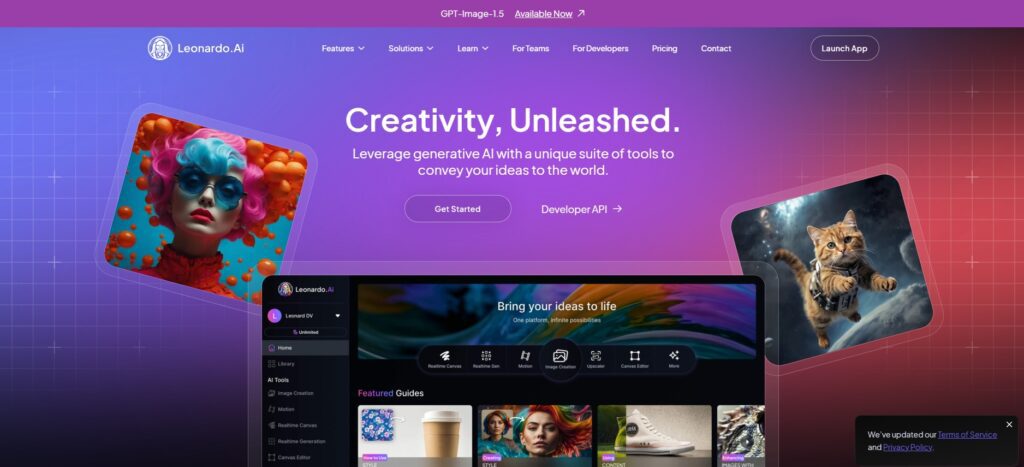
Key Features of Leonardo AI
Leonardo’s feature set covers the complete AI image production workflow: text-to-image and image-to-image generation across 30+ foundational models (Leonardo Phoenix, PhotoReal v2, Anime XL, and more), custom LoRA model training for replicating specific styles or characters, Universal Upscaler and Alchemy Refiner for resolution and quality enhancement, background removal, inpainting for targeted regional edits, 3D texture generation for game assets, video generation through Veo 3 integration, and prompt guidance tools that help less experienced users craft effective prompts. All generation happens in the browser — no installation, no GPU required.
What Is DALL·E / GPT Image 1? (2026 Update)
The most important thing to know for a 2026 comparison: DALL·E 3 has been renamed and upgraded to GPT Image 1, launched in April 2025. This is not just a rebrand — GPT Image 1 is a significantly more capable model with fundamentally improved text rendering within images (historically one of DALL·E’s biggest weaknesses), better instruction following, and native integration with ChatGPT’s conversational interface for iterative editing.
GPT Image 1 is accessed through ChatGPT — there is no standalone DALL·E app or subscription. When ChatGPT users ask for an image, they’re now using GPT Image 1. The integration with ChatGPT’s conversation interface is genuinely different from any other image generator: you can iteratively edit an image through natural language (“make the background blue”, “add a hat to the character”, “change it to a night scene”) without re-prompting from scratch. This conversational editing workflow is GPT Image 1’s most significant practical advantage over Leonardo.
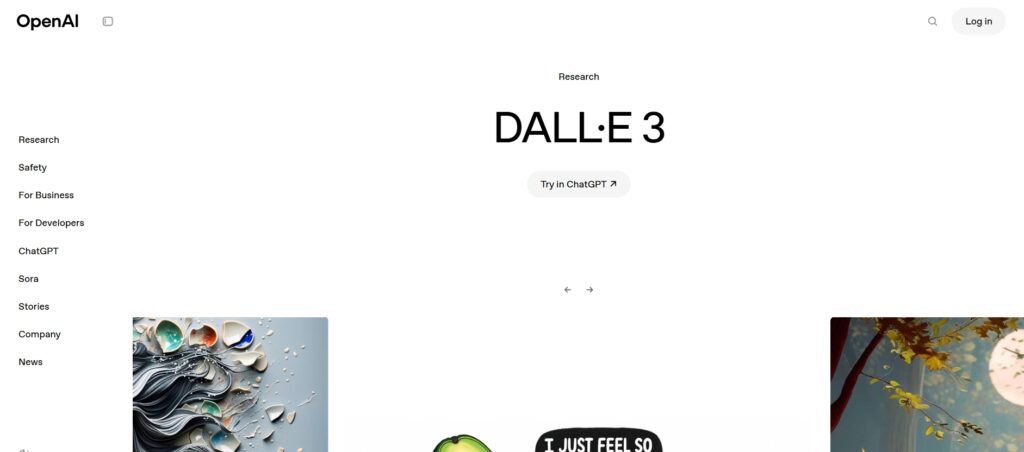
Key Features of GPT Image 1 (formerly DALL·E)
GPT Image 1’s core capabilities: text-to-image generation with exceptional natural language prompt understanding, conversational image editing through ChatGPT (“make it more dramatic”), vastly improved text rendering within images (accurate, legible text placement that was historically impossible in AI image generation), inpainting and outpainting, image variations, fast generation speeds, and commercial usage rights for ChatGPT subscribers. The ChatGPT integration also means image generation works alongside GPT-5.2’s reasoning and writing capabilities — you can describe a complex concept and have the AI generate an appropriate image in the same conversation.
Feature-by-Feature Comparison
1. Image Quality and Artistic Control
Leonardo AI’s quality advantage is in style diversity and professional consistency. With 30+ foundational models, each tuned for specific aesthetics, Leonardo produces consistently polished output across cinematic visuals, stylised illustrations, game assets, concept art, and photorealistic scenes. The PhotoReal v2 model specifically is competitive with the best photorealism available in consumer AI tools. More importantly, Leonardo’s LoRA training means you can define a visual style or character once and reproduce it reliably across dozens of images — solving the consistency problem that makes AI generation impractical for many professional workflows.
GPT Image 1’s quality strength is in prompt interpretation accuracy and text rendering. It translates complex, nuanced descriptions into visually accurate images better than most models — abstract concepts, unusual combinations, specific spatial arrangements. Its text rendering within images (signs, labels, captions embedded in the image itself) is dramatically better than DALL·E 3 was and significantly better than Leonardo in most cases. For photorealism on standard subjects, GPT Image 1 is genuinely competitive with Leonardo’s PhotoReal model.
Winner: Leonardo AI for style diversity, customisation, and character/brand consistency. GPT Image 1 for text-within-image accuracy and prompt interpretation.
2. Ease of Use and User Experience
GPT Image 1 via ChatGPT is the most beginner-accessible AI image generator available. You describe what you want in plain conversational language, and if it’s not quite right, you tell ChatGPT what to change — “make it darker”, “remove the person in the background”, “make the text say ‘Hello World'”. This iterative conversational workflow removes the prompt engineering knowledge requirement entirely. If you already use ChatGPT (which at 400M+ weekly users, many people do), image generation is a one-click addition to an existing workflow rather than a new tool to learn.
Leonardo AI requires more initial investment. The first session involves choosing between 30+ models, understanding the token system, learning what the style presets do, and figuring out how negative prompts work. The platform is well-designed with a logical progression from simple to advanced, and the community feed provides practical examples to learn from — but there’s a real 30–60 minute learning curve before you’re generating consistently good results. For users who invest that time, the control they gain is significantly greater than ChatGPT offers.
Winner: GPT Image 1 (DALL·E) for beginners and casual users. Leonardo AI for users willing to invest initial learning time for greater control.
3. Customisation and Model Training
Leonardo AI’s LoRA training is its most significant competitive differentiator. You provide reference images, train a model on a specific visual style, character design, or product appearance, and then apply it to all future generations to maintain visual consistency. This is the capability that makes Leonardo production-viable for game development (consistent character art across environments), brand work (visual identity maintained across dozens of assets), and illustrated content (recurring character recognition). The Apprentice plan includes 1 LoRA slot per month; Artisan provides 20; Maestro provides 50.
GPT Image 1 does not support custom model training of any kind. You cannot define a style, train on your own images, or guarantee that the same character looks consistent across multiple generations. For single-image generation or casual use, this limitation is invisible. For professional workflows requiring visual consistency across multiple outputs, it’s a fundamental constraint that Leonardo solves and GPT Image 1 does not.
Winner: Leonardo AI — clearly. GPT Image 1 has no equivalent capability to custom model training.
4. Prompt Understanding and Accuracy
GPT Image 1 benefits from the same exceptional natural language understanding that powers GPT-5.2’s text capabilities. It interprets complex, multi-part prompts with high fidelity, handles abstract and unusual requests well, and rarely requires significant prompt refinement to produce an image that matches the description. The conversational editing feature means that when the first generation isn’t quite right, you correct it through dialogue rather than crafting a new prompt from scratch — which for many users is a fundamentally more natural workflow.
Leonardo AI requires more deliberate prompt crafting. A well-written, specific prompt with appropriate negative prompts produces excellent results; a vague or incomplete prompt produces more variable output. Leonardo’s built-in prompt enhancement tools help bridge this gap, automatically improving prompt quality before generation. For users who develop prompt engineering skills, Leonardo’s model-specific prompting produces highly precise results. For users who want to skip that learning, GPT Image 1’s natural language understanding is more forgiving.
Winner: GPT Image 1 for natural language understanding and iterative editing. Leonardo AI for precise, parameterised generation control.
Pricing Comparison — Verified 2026 Numbers
Leonardo AI Pricing
Leonardo uses a token-based model — tokens are consumed per generation based on resolution, model, and features. Annual billing saves 17–20%. Tokens do not roll over between months.
| Plan | Monthly | Annual | Tokens/Month | Key Inclusions |
|---|---|---|---|---|
| Free | $0 | $0 | 150/day (daily reset) | Public generations, community models — no LoRA, no private mode |
| Apprentice | $12/mo | $10/mo | 8,500 | Private generations, Alchemy Refiner, 1 LoRA/month, faster speed |
| Artisan | $30/mo | $24/mo | 25,000 | PhotoReal v2, 20 model slots, API access, relax mode — best value |
| Maestro | $60/mo | $48/mo | 60,000 | 50 model slots, max priority queue, highest generation speed |
Token consumption varies: a standard generation costs 4–6 tokens; Alchemy Refiner costs 10–15 tokens per image; video generation via Veo 3 costs 2,500 tokens for 5 seconds. For commercial work, the Apprentice plan ($10/month annual) is the minimum practical tier — free plan generations are public and Leonardo AI can use them to improve its models.
GPT Image 1 (DALL·E) Pricing
GPT Image 1 is accessed through ChatGPT — there is no standalone subscription. The cost is whatever ChatGPT plan you’re on, with image generation included in the allocation.
| Access Method | Cost | Image Generation | Best For |
|---|---|---|---|
| ChatGPT Free | $0 | Limited — low allocation, may include watermark | Occasional casual use, testing |
| ChatGPT Plus | $20/mo | Full GPT Image 1 access, ~40 images included, no watermark | Regular individual use — most common paid tier |
| ChatGPT Pro | $200/mo | Higher allocation, priority access | Heavy power users needing maximum limits |
| API — GPT Image 1 Mini | ~$0.005–$0.052/image | Lower quality, cost-efficient for volume | Developers, automated pipelines |
| API — GPT Image 1 Standard | ~$0.02–$0.19/image | Full quality, varies by resolution | Developers needing premium quality |
The practical pricing comparison: for a creator generating 40 images per month, GPT Image 1 via ChatGPT Plus at $20/month includes roughly that many images as part of a subscription that also covers GPT-5.2 for all text tasks. Leonardo Apprentice at $10/month (annual) gives 8,500 tokens — approximately 1,400–2,100 standard images per month — for a tool dedicated exclusively to image generation. At the $20/month price point, Leonardo Artisan gives 25,000 tokens per month. For high-volume image production, Leonardo’s economics are significantly better per image. For occasional use within an existing ChatGPT workflow, GPT Image 1 adds zero marginal cost.
Best Use Cases
Leonardo AI — Best For
Game developers building consistent character art, environment backgrounds, and texture assets across a project. Designers building brand visual identities that require style consistency across dozens of images. Content creators who generate images at volume — 500+ per month — where Leonardo’s token economics significantly outperform ChatGPT’s image limits. NFT and concept artists who need fine-grained aesthetic control. Marketers and agencies producing visual assets for multiple clients with distinct visual requirements. Anyone who needs custom model training to maintain character or product consistency across multiple generations.
GPT Image 1 (DALL·E) — Best For
Bloggers and marketers who need quick, relevant images within their existing ChatGPT workflow without learning a separate platform. Users who need text accurately rendered within images — infographics, mockups with readable text, social posts with embedded captions. Social media creators who want to iterate on an image conversationally (“make it more vibrant”, “change the background to a beach”). Educational content creators who need accurate visual representations of concepts described in plain language. Anyone who already uses ChatGPT Plus and wants image generation without an additional subscription cost. Non-designers who want results without any learning curve.
Commercial Usage and Licensing
Both platforms allow commercial usage, but with different structures. Leonardo AI’s free plan generations are public — Leonardo AI can use, modify, and share them to improve its models, making the free tier unsuitable for commercial work. Paid plans (Apprentice and above) include private generation mode with full IP ownership. Artisan at $24/month (annual) is the minimum practical tier for commercial clients. GPT Image 1 through ChatGPT Plus allows commercial use of generated images under OpenAI’s terms of service for subscribers — images generated via ChatGPT can be used commercially without an additional licence fee. API use follows OpenAI’s API terms, which generally allow commercial use. Both platforms prohibit generating certain categories of content under their respective safety policies, and both use content moderation to enforce those limits — GPT Image 1 via OpenAI’s systems, Leonardo AI through its platform guidelines.
AI Ethics, Safety and Content Moderation
GPT Image 1 operates under OpenAI’s safety framework — one of the most extensively documented and tested AI safety systems available. Content moderation is strict, and certain requests that other platforms might process are declined. For most legitimate creative and commercial use, this moderation is invisible. For users who want to generate content in edge categories that major platforms restrict (certain art styles, mature themes), Leonardo AI’s less restrictive moderation may be relevant. Leonardo AI operates under its own community guidelines, which are generally less restrictive than OpenAI’s, though still prohibiting harmful content generation.
Pros and Cons
Leonardo AI Pros
- Custom LoRA model training for style and character consistency — a professional capability GPT Image 1 simply doesn’t have
- 30+ foundational models covering every aesthetic style — photorealism, anime, concept art, game assets
- Significantly better token economics at high generation volumes vs ChatGPT image limits
- Generous free tier — 150 tokens/day, unlimited Relax Mode, real utility without payment
- Comprehensive editing suite — upscaling, background removal, inpainting, video generation
- Full IP ownership on paid plans — essential for commercial client work
Leonardo AI Cons
- Steeper learning curve — model selection, token system, and prompt engineering require 30–60 minutes of initial investment
- No conversational editing — you re-prompt rather than iterating through dialogue
- Weaker text rendering within images compared to GPT Image 1
- Tokens don’t roll over — unused monthly allocation expires
GPT Image 1 (DALL·E) Pros
- Most beginner-accessible image generator — conversational interface requires zero prompt engineering knowledge
- Best text rendering within images — readable, accurately placed text in infographics, mockups, designs
- Conversational editing — iterative refinement through natural language (“change the lighting”, “remove that element”)
- Zero additional cost for ChatGPT Plus subscribers — adds to existing $20/month spend rather than a separate subscription
- Excellent prompt interpretation — complex descriptions produce accurate outputs with minimal refinement
GPT Image 1 (DALL·E) Cons
- No custom model training — cannot define a reusable visual style or maintain character consistency across generations
- Image generation limits on Plus (~40/month) are restrictive for high-volume creators
- Stricter content moderation than Leonardo — some legitimate creative requests may be declined
- No dedicated image generation platform — all access is through ChatGPT, which means using a general-purpose interface for a specialised task
Final Verdict — Leonardo AI vs GPT Image 1 (DALL·E)
The Leonardo AI vs DALL·E debate ultimately comes down to the same dimension as the broader AI image generator market: control and consistency vs simplicity and integration.
Choose Leonardo AI if you generate images professionally or at volume. If you need the same character to look consistent across 50 images, the same brand aesthetic to hold across a campaign, or you’re producing game assets where style coherence is non-negotiable — Leonardo AI’s LoRA training solves a problem that GPT Image 1 cannot address at all. At $10/month (Apprentice, annual) to $24/month (Artisan, annual), the economics for high-volume creators are also significantly better than ChatGPT’s image limits.
Choose GPT Image 1 (DALL·E) if you’re a casual creator, already use ChatGPT Plus, and want images as part of a broader AI workflow without an additional subscription. The conversational editing is genuinely transformative for non-designers — the ability to describe what’s wrong and have it fixed through dialogue rather than re-prompting is a meaningful workflow improvement. If you need text accurately placed within images (product mockups, informational graphics, social posts), GPT Image 1 is also the stronger choice there.
Conclusion
In 2026, the comparison has matured significantly from early AI image generation. GPT Image 1’s text rendering and conversational editing represent real capability improvements over DALL·E 3. Leonardo AI’s LoRA training and model ecosystem provide professional capabilities that no other consumer tool matches. The right choice depends entirely on your workflow — and many creators end up using both: GPT Image 1 for quick concept work and text-heavy images within ChatGPT, Leonardo AI for polished final outputs and brand-consistent visual production.
Is Leonardo AI better than DALL·E?
For professional and high-volume use, yes. Leonardo AI’s custom LoRA model training for style and character consistency is a capability that GPT Image 1 (the current DALL·E successor) simply doesn’t offer. For volume, Leonardo’s token economics are better than ChatGPT’s image generation limits. For casual use, quick concept work, and text-within-image accuracy, GPT Image 1 via ChatGPT is the easier and more accessible choice — especially if you already use ChatGPT Plus at $20/month.
Can I use Leonardo AI images commercially?
Yes — paid plans (Apprentice, Artisan, Maestro) include private generation mode with full IP ownership, making them suitable for commercial and client work. The free plan generates public images that Leonardo AI can use to improve its models, making it unsuitable for commercial work where content privacy matters. The Apprentice plan at $10/month (annual billing) is the minimum practical tier for commercial use — it unlocks private generations and provides 8,500 tokens per month.
Is DALL·E free to use?
GPT Image 1 (the current DALL·E model) is available through ChatGPT’s free plan with limited image generation — useful for occasional use. Full access with ~40 images per month and no watermark requires ChatGPT Plus at $20/month. There is no standalone DALL·E subscription — all access is through ChatGPT plans. Since January 2026, free ChatGPT users have more limited image generation access. API access is available separately at $0.005–$0.19 per image depending on model quality and resolution.
Which AI tool is better for beginners?
GPT Image 1 via ChatGPT is significantly more beginner-friendly. The conversational interface allows you to describe what you want in plain language and correct it through dialogue (‘make it brighter’, ‘add a tree on the left’) without any prompt engineering knowledge. Leonardo AI requires choosing from 30+ models, understanding the token system, and learning prompt crafting — which takes 30–60 minutes of initial investment before producing consistently good results. For absolute beginners who want images without learning anything new, GPT Image 1 is the right starting point.
Does Leonardo AI support custom model training?
Yes — Leonardo AI’s LoRA (Low-Rank Adaptation) model training is one of its most significant professional features. You provide reference images of a specific style, character, or product appearance, train a custom model, and then apply it to all future generations to maintain visual consistency. The Apprentice plan includes 1 LoRA training slot per month; Artisan provides 20 personal model slots; Maestro provides 50. This capability is what makes Leonardo production-viable for game development, brand design, and any project requiring multiple consistent images of the same subject.
Is DALL·E good for realistic images?
Yes — GPT Image 1 (the current model, upgraded from DALL·E 3 in April 2025) produces genuinely photorealistic images with good lighting, composition, and detail. Its particular strength over previous DALL·E versions is text rendering — placing readable, accurately styled text within images was historically DALL·E’s biggest weakness and is now dramatically better. For photorealism on standard subjects, GPT Image 1 is competitive with Leonardo AI’s PhotoReal v2 model. For highly specific photorealistic compositions requiring ControlNet-style structural guidance, Leonardo has an edge.
Which is better for game assets?
Leonardo AI is the stronger choice for game development assets by a significant margin. The combination of models specifically tuned for game asset aesthetics (characters, environments, weapons, UI elements), LoRA training for maintaining consistent visual style across an entire game, 3D texture generation tools, and the ability to generate hundreds of assets per month within the token system makes it purpose-built for this use case. GPT Image 1 can generate individual game-style images competently but lacks the consistency tools and volume economics that professional game development requires.
Can I use both Leonardo AI and DALL·E together?
Yes — and many creators do. A practical workflow: use GPT Image 1 in ChatGPT for quick concept exploration, initial ideation, and any images requiring accurate text rendering. Use Leonardo AI for final production images where style consistency matters, for high-volume generation where the token economics are better, and for brand or character-specific work requiring LoRA training. The tools are complementary rather than competing — GPT Image 1 is faster and simpler for concept work; Leonardo AI is more capable for polished production output.





I am Ashish Yadav a software engineer and AI tools researcher with over five years of practical experience working with real-world systems and automation. I am founder of CognifyFuture, where I analyzes, tests, and breaks down AI tools with a focus on what actually works—not what’s trending.
My content is built on hands-on usage, not theory. Instead of generic advice, I focuses on real implementation—how AI tools can be used to automate tasks, improve efficiency, and solve any specific business or individual problems.
Through CognifyFuture, My aims is to eliminate confusion around AI by delivering clear, honest, and actionable insights that help users make smarter technology decisions.