Where do you actually start if you’ve never sent a marketing email in your life?
Most beginner guides drown you in jargon before you’ve sent a single email. You don’t need to understand every term on day one you need to send your first real campaign, learn from how it performs, and build from there. Email marketing rewards people who start simple and improve gradually far more than it rewards people who spend weeks researching the “perfect” setup before sending anything.
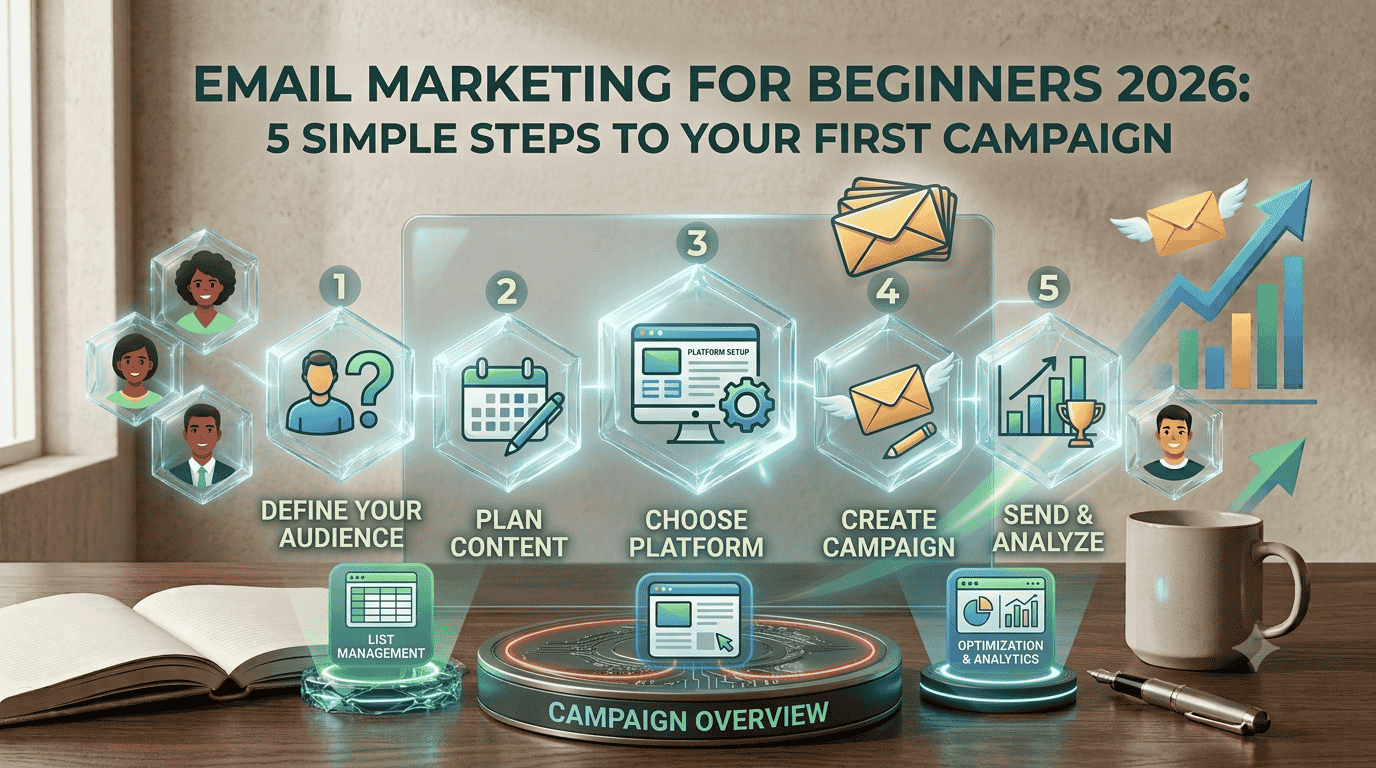
I broke down Email Marketing for Beginners into the exact sequence a true beginner should follow, answering the questions that actually block people from getting started:
- What do you actually need before sending your first email?
- How do you build a list from zero without buying one (which you should never do)?
- What should your first few emails actually contain?
- Which metrics matter when you’re just starting out, and which can you ignore?
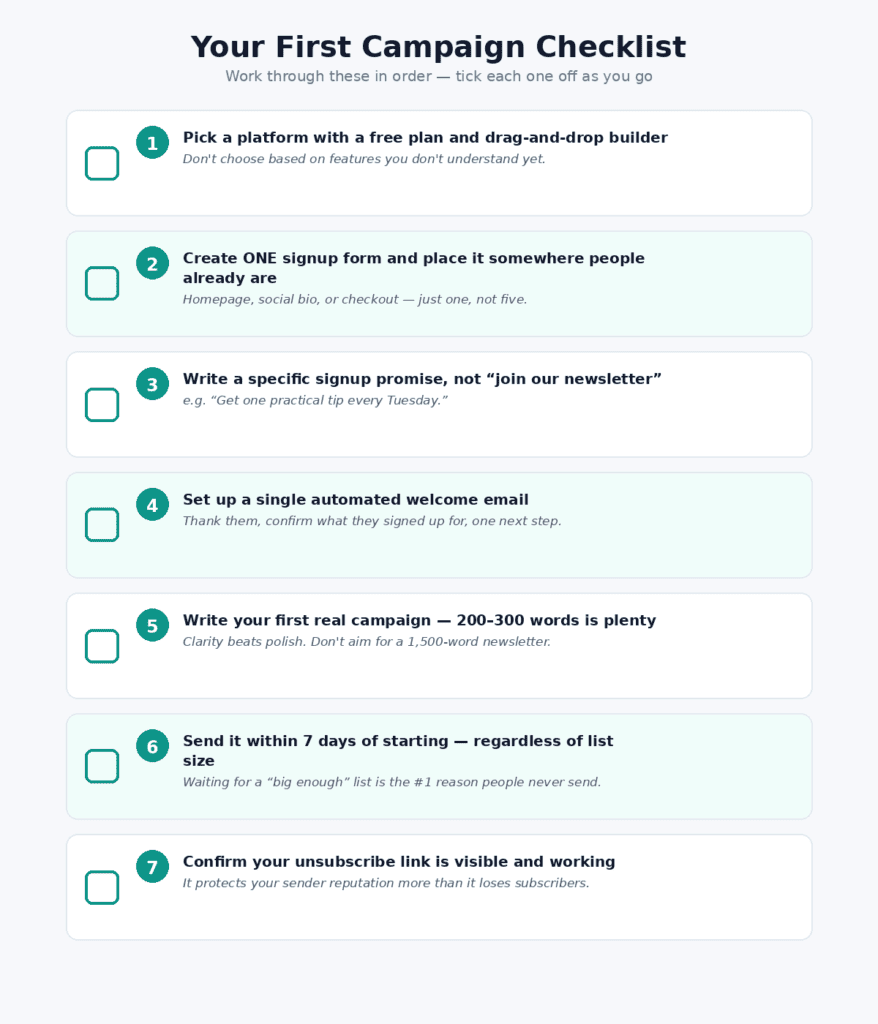
Short answer: pick a beginner-friendly platform with a free plan, set up one simple opt-in method, write a basic welcome email, send your first real campaign within a week of starting, and watch open rate and click rate (ignore everything else at first). Below is the full step-by-step path.
Step 1: Choose a Platform That Won’t Overwhelm You
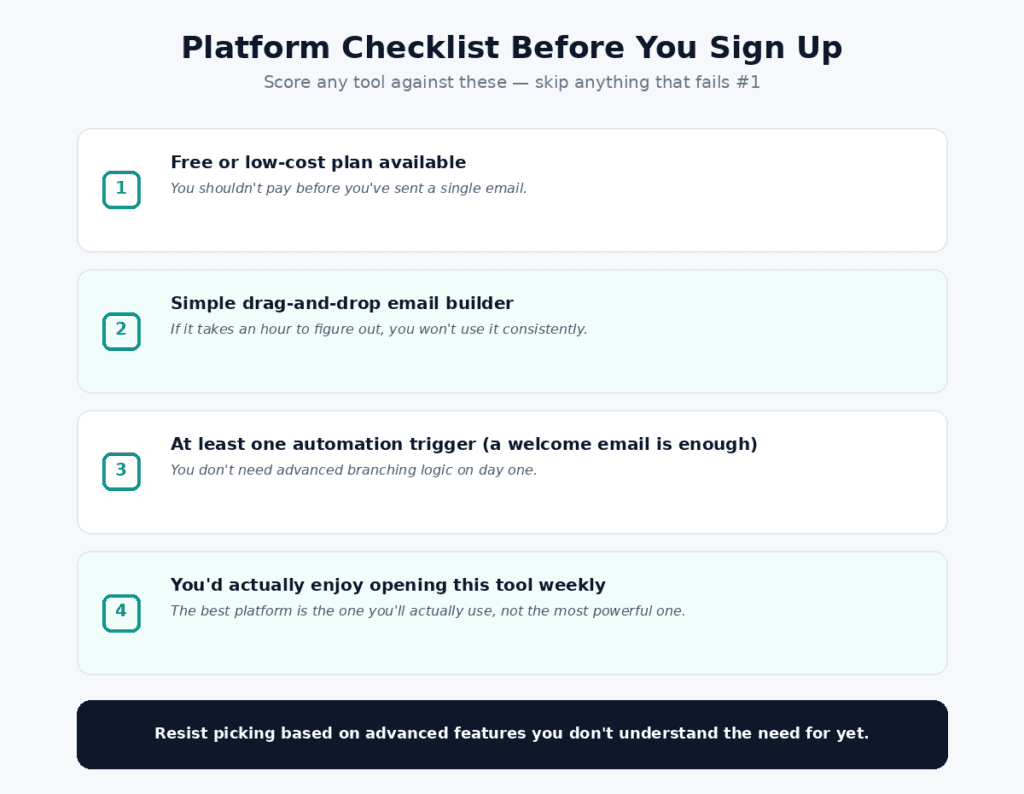
Your first platform doesn’t need every feature it needs to be simple enough that you actually send something instead of getting stuck configuring settings. Look for a free or low-cost plan, a straightforward drag-and-drop email builder, and basic automation (even just a single welcome email trigger is enough to start).
See our Best Free Email Marketing Tools 2026 guide for a full breakdown of beginner-friendly free plans and what each one actually includes.
Resist the urge to pick a platform based on advanced features you’ve read about but don’t yet understand the need for. The “best” platform for a beginner is the one you’ll actually use consistently, not the one with the most automation capabilities sitting unused.
Step 2: Set Up One Way for People to Join Your List
You don’t need five different signup forms across your website on day one. Pick the single most natural place people already are your website’s homepage, a link in your social media bio, or the checkout flow if you run a store and set up one clean signup form there.
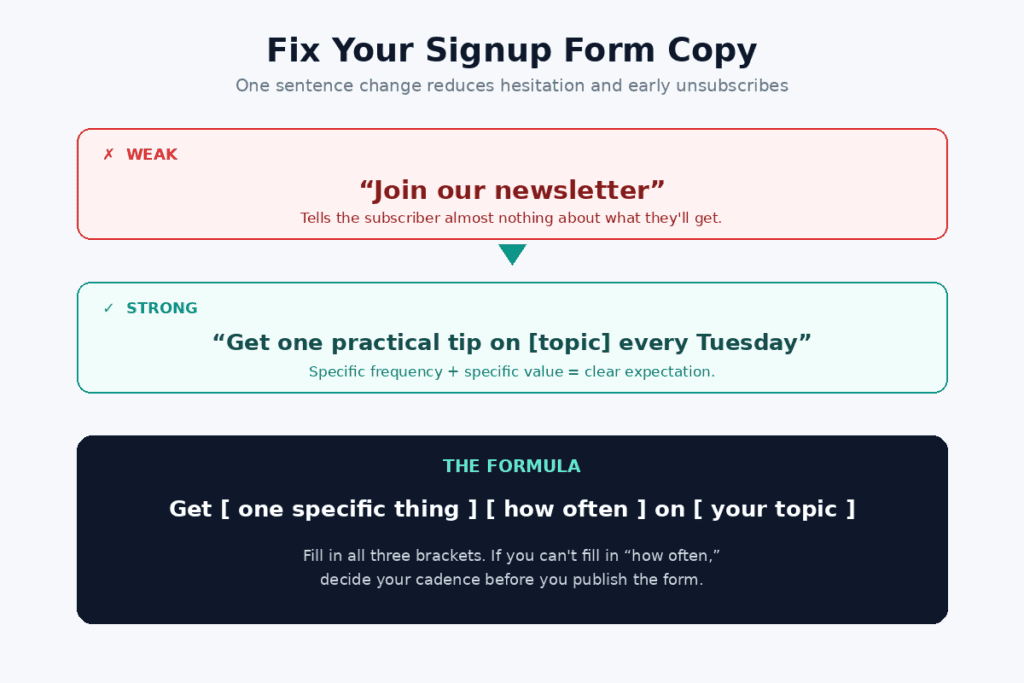
Be specific about what subscribers are signing up for. “Join our newsletter” tells someone almost nothing about what they’ll receive; “Get one practical tip on [your topic] every Tuesday” sets a clear expectation that reduces both hesitation to sign up and the chance of an early unsubscribe once they realize what they actually agreed to.
Step 3: Never Buy an Email List
This deserves direct emphasis because it’s the single most damaging mistake a beginner can make, and it’s tempting precisely because building a list organically feels slow. Purchased lists are full of people who never agreed to hear from you, which means immediate high spam complaint rates, damaged sender reputation that affects deliverability for months afterward, and in many regions, outright legal exposure under consent-based email regulations.
A list of 50 people who genuinely opted in is worth more than a purchased list of 50,000 who didn’t, because the smaller list will actually open, click, and buy, while the larger one will tank your sender reputation before you’ve sent a handful of campaigns.
Step 4: Write a Simple Welcome Email First
Before worrying about a full campaign calendar, set up one automated welcome email that fires when someone joins your list. Keep it simple: thank them, confirm what they signed up for, and give one clear next step (read your best piece of content, check out a specific product, or simply reply and say hello).
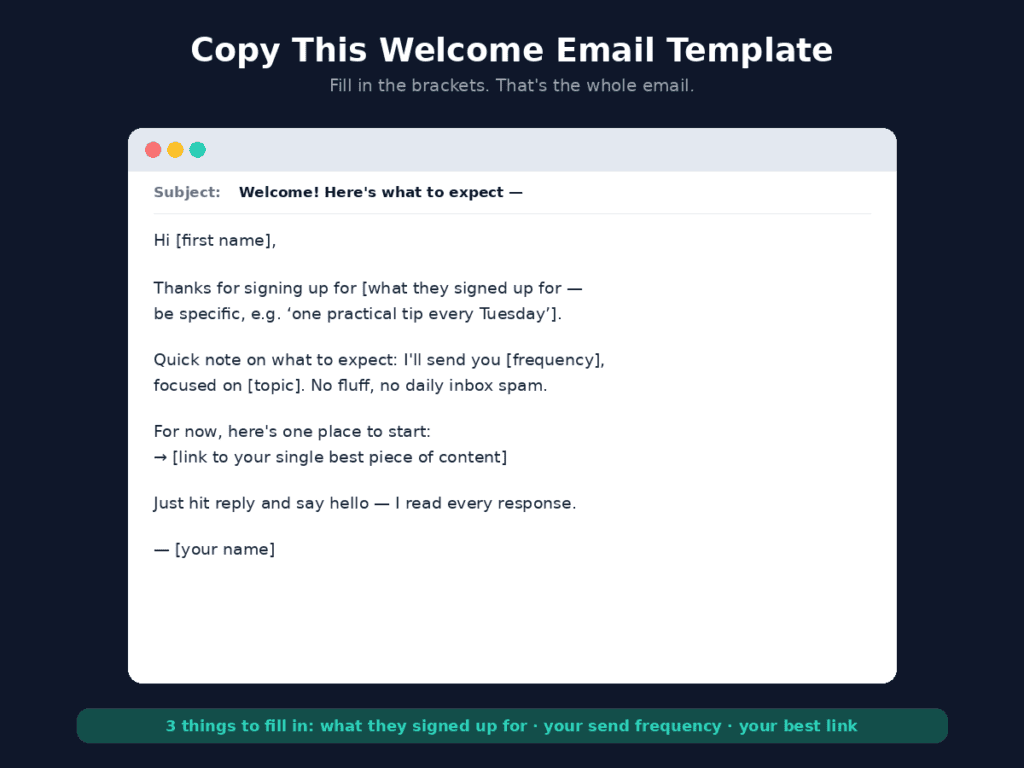
Once you’re comfortable with the basics, our Best Welcome Email Sequences 2026 guide walks through expanding this into a full multi-email sequence but a single welcome email is a completely reasonable starting point, not something to feel behind about.
Step 5: Send Your First Real Campaign Within a Week
Don’t wait until your list reaches some arbitrary size, and don’t wait until you feel fully ready. Send something real an update, a piece of content, a simple offer within the first week of having even a handful of subscribers. The goal at this stage isn’t a perfect campaign; it’s breaking the inertia of “I’ll send something once I’ve planned it properly,” which for most beginners means never sending anything at all.
Keep the first few emails short. A beginner agonizing over a 1,500-word newsletter is more likely to never finish it than someone who commits to sending a focused 200-word update consistently.
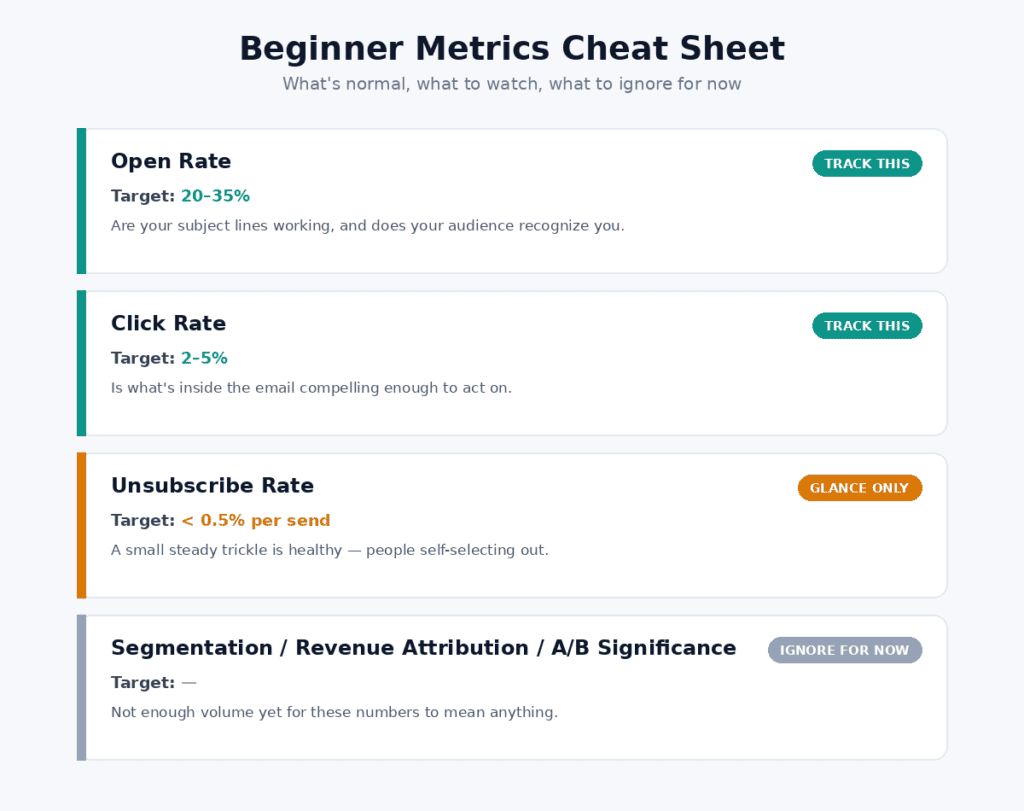
Email Marketing for Beginners : Which Metrics Actually Matter When You’re Starting Out
Email platforms surface a lot of numbers, and as a beginner, most of them aren’t worth your attention yet.
Open rate tells you whether your subject lines are working and whether your audience recognizes and wants mail from you. It’s the first signal worth tracking, even though privacy changes on some email clients have made open rate somewhat less precise than it used to be.
Click rate tells you whether the content inside the email is actually compelling enough to act on. If your open rate is healthy but click rate is consistently low, the issue is usually inside the email unclear calls to action, too much content competing for attention, or a mismatch between what the subject line promised and what the email delivers.
Unsubscribe rate matters, but mostly as a sanity check rather than something to obsess over. A small, steady trickle of unsubscribes is completely normal and often healthy it usually means people who were never going to engage are self-selecting out, leaving you with a more genuinely interested list.
Everything else detailed segmentation performance, revenue attribution, A/B test statistical significance can wait until you have enough volume and experience for those numbers to actually mean something. Tracking them too early just adds noise without giving you anything actionable to change.
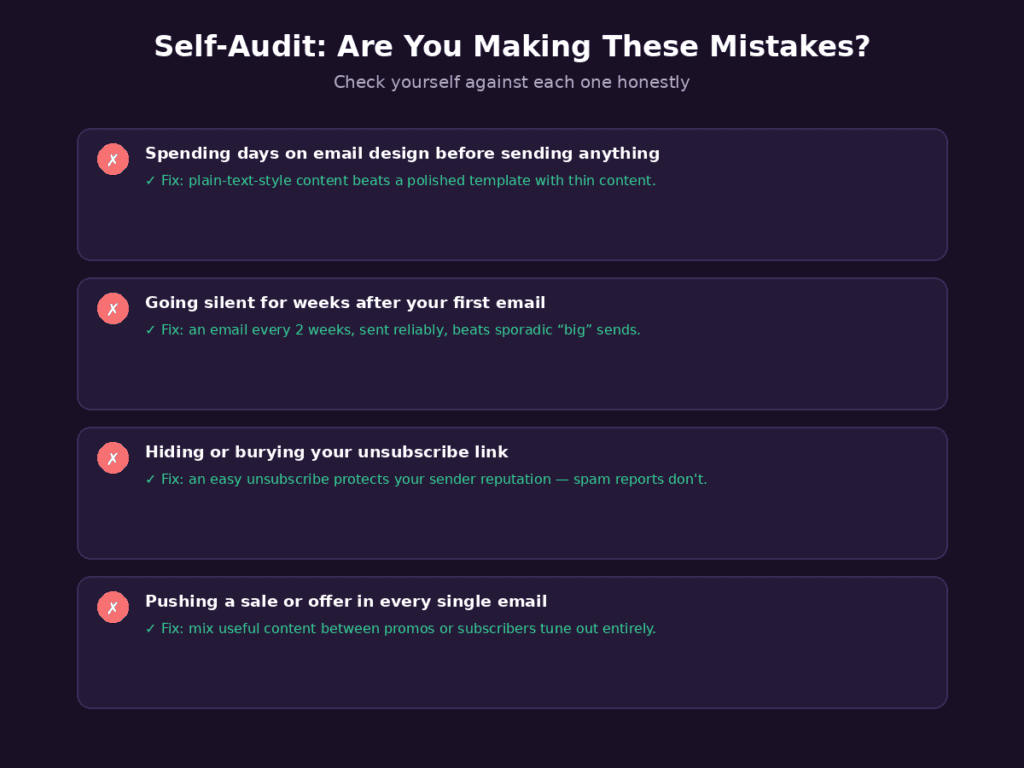
Email Marketing for Beginners : Common Beginner Mistakes Worth Avoiding Early
Overthinking Design Before You’ve Sent Anything
A plain-text-style email with clear, well-written content consistently outperforms a heavily designed template with thin content. Spend your early effort on what you’re actually saying, not on perfecting visual templates before you have any sense of what your audience responds to.
Going Silent After the First Email
Many beginners send one enthusiastic first email and then go quiet for weeks or months. Consistency matters more than perfection here a simple email every two weeks, sent reliably, builds far more trust and engagement than an occasional, sporadically-timed “big” email.
Ignoring the Unsubscribe Link
It might feel counterintuitive to make it easy for people to leave your list, but a clearly visible, working unsubscribe link actually protects your sender reputation. Someone who can’t easily unsubscribe is more likely to mark your email as spam instead, which damages your deliverability with every mailbox provider, not just for that one recipient.
Treating Every Email Like It Needs a Sale
If every single email pushes a purchase or offer, subscribers learn to tune out your mail entirely. Mixing in genuinely useful or interesting content between promotional emails keeps engagement healthy, which in turn keeps your deliverability strong for when you do need a promotional email to actually land and convert.
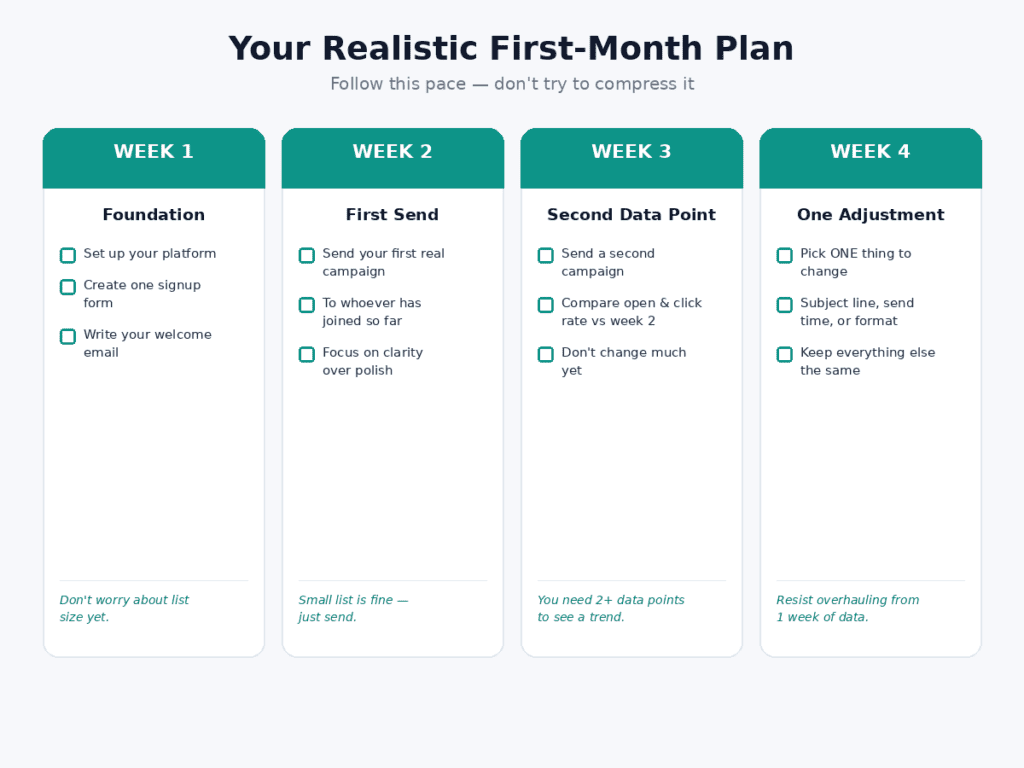
A Realistic First-Month Plan
Week 1: Set up your platform, create one signup form, and write a simple welcome email. Don’t worry about list size yet.
Week 2: Send your first real campaign to whoever has joined so far, even if it’s a small number of people. Focus on clarity over polish.
Week 3: Send a second campaign and start paying attention to open and click rate trends between the two. Don’t change much yet you need at least a couple of data points before drawing conclusions.
Week 4: Based on what you’re seeing, make one small adjustment (subject line style, send time, or content format) and keep going. Resist the urge to overhaul everything based on a single week of data.
What to Learn Next, Once You’re Comfortable
Once you’ve sent a handful of campaigns and have a basic welcome email running, the next reasonable steps are expanding your welcome sequence into multiple emails, learning the basics of list segmentation so different subscribers get more relevant content, and if you run an online store, setting up an abandoned cart flow, which is typically the single highest-converting automation available once you have any ecommerce component at all.
Our Abandoned Cart Email Flow Guide 2026 and Best Welcome Email Sequences 2026 guides are natural next reads once the fundamentals here feel comfortable.
Final Verdict
Email marketing rewards starting simple far more than it rewards starting “correctly.” Pick an easy platform, build your list honestly through genuine opt-ins, send a real campaign within your first week, and pay attention to just open rate and click rate while you’re getting your bearings. Everything more advanced automation sequences, segmentation, A/B testing is something to layer in once the basics feel comfortable, not something to master before you’ve sent your first email.
The biggest predictor of long-term success in email marketing isn’t technical sophistication on day one; it’s whether you actually keep sending consistently while you learn. Start smaller and simpler than feels impressive, and let your own data teach you what to improve next.
1. What do I need to start email marketing as a complete beginner?
A beginner-friendly email platform with a free plan, one simple signup form placed somewhere people already visit (your website or social bio), and a basic welcome email. You don’t need advanced automation, segmentation, or a large list to get started meaningfully.
2. Can I buy an email list to get started faster?
No. Purchased lists contain people who never opted in, leading to high spam complaint rates that damage your sender reputation, poor engagement since recipients don’t know or want to hear from you, and potential legal issues under consent-based email regulations in many regions.
3. How long should my first emails be?
Shorter than you think. A focused 200-300 word email that’s actually finished and sent is far more valuable than a long, polished newsletter that never gets completed. Build the habit of sending consistently before worrying about length or design sophistication.
4. Which email marketing metrics should beginners actually track?
Open rate (are your subject lines working) and click rate (is your content compelling enough to act on) are the two metrics worth focused attention early on. Unsubscribe rate is worth a glance as a sanity check, but a small steady trickle is normal. More advanced metrics like revenue attribution and A/B test significance can wait.
5. How often should I send emails as a beginner?
Consistency matters more than frequency. A simple email sent reliably every two weeks builds more trust and engagement than sporadic, irregular sends, even if those occasional emails are more polished. Pick a cadence you can realistically sustain and stick to it.
6. Should I worry about email design when I’m just starting out?
Not much. A simple, text-focused email with genuinely useful content typically outperforms a heavily designed template with thin content. Spend your early effort on what you’re saying rather than on visual polish before you understand what your specific audience responds to.
7. Why does my unsubscribe link matter if I want to keep subscribers?
A visible, working unsubscribe link actually protects your sender reputation. Someone who can’t easily unsubscribe is more likely to mark your email as spam instead, which damages your deliverability with mailbox providers more broadly, not just for that individual recipient.
8. What should a beginner learn after mastering the basics?
Expanding a single welcome email into a full multi-email welcome sequence, learning basic list segmentation so different subscribers receive more relevant content, and if running an online store, setting up an abandoned cart flow, which is typically the highest-converting automation available for ecommerce.





I am Ashish Yadav a software engineer and AI tools researcher with over five years of practical experience working with real-world systems and automation. I am founder of CognifyFuture, where I analyzes, tests, and breaks down AI tools with a focus on what actually works—not what’s trending.
My content is built on hands-on usage, not theory. Instead of generic advice, I focuses on real implementation—how AI tools can be used to automate tasks, improve efficiency, and solve any specific business or individual problems.
Through CognifyFuture, My aims is to eliminate confusion around AI by delivering clear, honest, and actionable insights that help users make smarter technology decisions.