
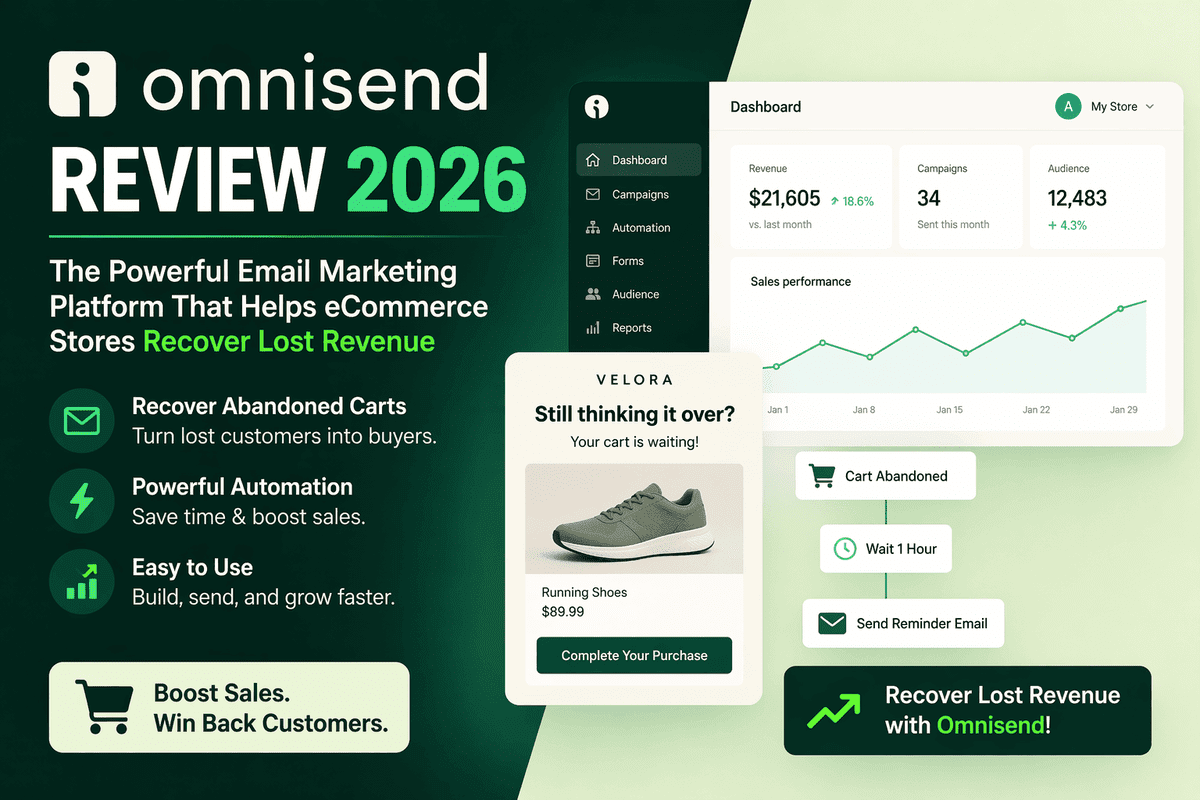
Have you ever checked your online store analytics and noticed something frustrating?
Visitors are coming.
Products are being viewed.
Some users are even adding items to their cart.
But sales are still lower than expected.
This is one of the most painful challenges for every eCommerce business owner.
The problem is not always traffic.
In fact, many stores already have enough visitors.
The real issue is what happens after the visitor lands on your store.
Questions like these start coming up:
- Why are customers leaving without buying?
- Why are repeat purchases low?
- Why is email marketing not converting?
- How do I recover abandoned carts?
- Which automation tool is actually worth paying for?
This is where Omnisend becomes a serious solution.
Omnisend is not just another email marketing tool.
It is a complete customer retention and sales automation platform built specifically for eCommerce businesses — and one of the best email marketing tools for Shopify and WooCommerce stores in 2026.
It helps online stores automate:
- welcome emails
- abandoned cart recovery
- order follow-ups
- product recommendations
- repeat purchase reminders
- SMS campaigns
- push notifications
In this in-depth Omnisend review 2026, I will explore everything from features and pricing to practical workflows, honest pros and cons, and real-world business use cases — including the major May 2026 SMS pricing change that most outdated reviews still miss.
If you are planning to buy an email and SMS marketing tool for your online store, this guide will help you decide whether Omnisend is worth it for you.
What Is Omnisend?
Omnisend is an omnichannel marketing automation platform designed mainly for eCommerce brands. It launched in 2014 (originally as “Soundest”) out of Lithuania, and by 2026 it powers email and SMS marketing for more than 125,000 ecommerce stores worldwide. It holds a 4.7–4.8★ rating on the Shopify App Store and 4.6★ on G2 — and when Yotpo discontinued its own email and SMS products, it named Omnisend as its preferred migration partner.
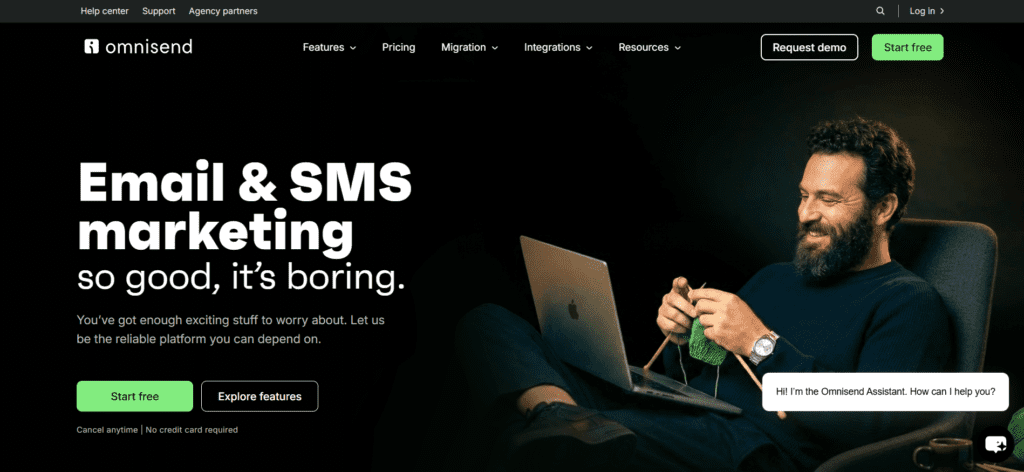
Unlike traditional email tools that focus only on newsletters, Omnisend helps you connect with customers across multiple channels — and because it integrates natively with Shopify, WooCommerce, and BigCommerce, every message can be triggered by real store behavior like product views, cart activity, and purchase history.
Read Best Email Marketing and Automation Tools for 2026 – Top 10 Tested Platforms Click Here
These include:
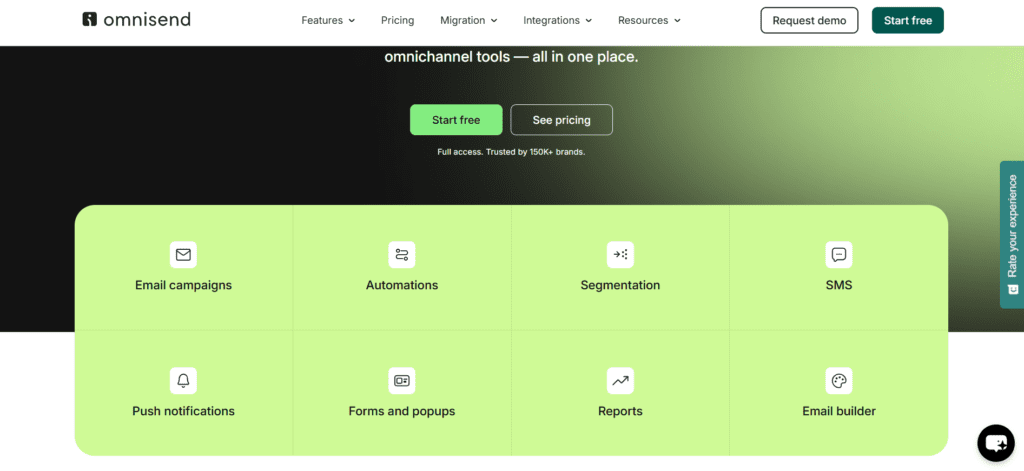
- email marketing
- SMS marketing
- web push notifications
- automated workflows
- customer segmentation
- product recommendation campaigns
The biggest advantage is that everything works together inside one platform.
For example:
A customer visits your website.
They browse a product.
They add it to the cart.
Then they leave.
Instead of losing that customer, Omnisend automatically triggers a recovery sequence.
This may include:
- an email reminder after 30 minutes
- an SMS after a few hours
- a discount email after 24 hours
This automation directly solves revenue leakage.
The Biggest Problem Omnisend Solves for Online Stores
The biggest problems Omnisend solves for online stores are abandoned cart revenue loss, low repeat purchase rates, and poor customer retention. Here is how it tackles each one.
1. Abandoned Cart Revenue Loss
This is the number one problem for most stores.
Customers show buying intent.
They add products to the cart.
But they do not complete the purchase.
This means your business is losing ready-to-buy customers — and Omnisend’s abandoned cart recovery is the single fastest way to win them back.
Real Practical Example
Let’s say you sell wireless earbuds.
Price: ₹2,999
A customer adds them to cart.
They get distracted and leave.
Without automation → sale lost
With Omnisend → automated recovery begins
Suggested Workflow
After 30 Minutes
“Looks like you left something behind.”
After 6 Hours
“Still thinking? Here’s why customers love this product.”
After 24 Hours
“Complete your order today and get 10% off.”
This abandoned cart email and SMS sequence alone can recover a significant percentage of lost sales.
For many businesses, this feature alone justifies the investment.
2. Low Repeat Purchase Rate
Many store owners focus too much on acquiring new customers.
But profitability often comes from repeat buyers.
A first purchase brings revenue.
A second and third purchase brings profit.
Omnisend helps solve this through post-purchase email automation workflows that lift customer lifetime value.
For example:
Customer buys skincare product.
After 7 days → usage tips email
After 15 days → customer review request
After 25 days → reorder reminder
This improves customer lifetime value.
3. Poor Customer Retention
Sometimes customers buy once and disappear.
This happens because brands fail to stay connected.
Omnisend solves this by keeping communication relevant.
Instead of sending the same message to everyone, it allows advanced customer segmentation.
Examples:
- first-time buyers
- repeat customers
- inactive customers
- high spenders
- location-based users
This creates personalized experiences.
Personalized marketing converts better.
Deep Dive into Practical Use Cases
This section is important because users searching for Omnisend usually have buying intent.
They want real applications and automation workflows they can copy.
Use Case 1: Welcome Automation Series
This is the first email automation every business should create.
Whenever someone subscribes, first impression matters.
Recommended Flow
Day 1
Welcome email + 10% discount coupon
Day 2
Best-selling products
Day 3
Brand story + trust building
Day 5
Customer testimonials
Day 7
Urgency offer
This helps convert subscribers into first-time buyers.
Use Case 2: Product Recommendation Automation
One of the best use cases for increasing average order value.
Example
Customer buys laptop.
After purchase, Omnisend recommends:
- laptop bag
- wireless mouse
- keyboard
- cooling pad
This increases cross-sell revenue.
Use Case 3: Re-engagement Campaign
Many subscribers become inactive.
Instead of ignoring them, Omnisend helps bring them back with a win-back campaign.
Workflow Example
No purchase for 30 days → reminder email
No open for 45 days → discount email
No action for 60 days → special win-back offer
This helps revive inactive customers.
Omnisend Features Review (In Depth)
Let’s break down the major Omnisend features in detail.
1. Drag-and-Drop Email Builder
This is one of the easiest parts of the platform.
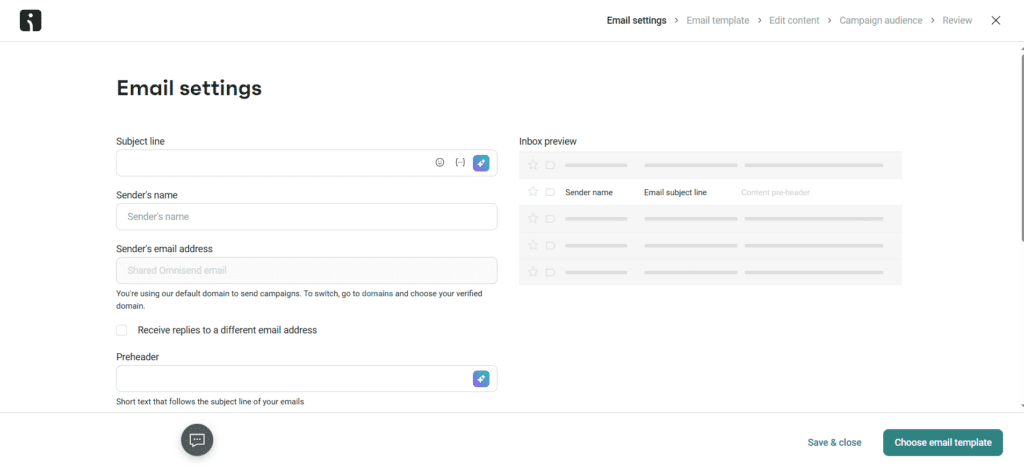
Even if you are not technical, you can create campaigns quickly.
Useful blocks include:
- product showcase
- CTA buttons
- banners
- coupon sections
- countdown timers
- review snippets
This saves time. A handy bonus is the built-in list-cleaning tool, which flags spam traps, typos, and disposable emails so your deliverability and sender reputation stay healthy — something Mailchimp and Klaviyo do not offer natively.
2. SMS Marketing
SMS is powerful because it gets immediate attention.
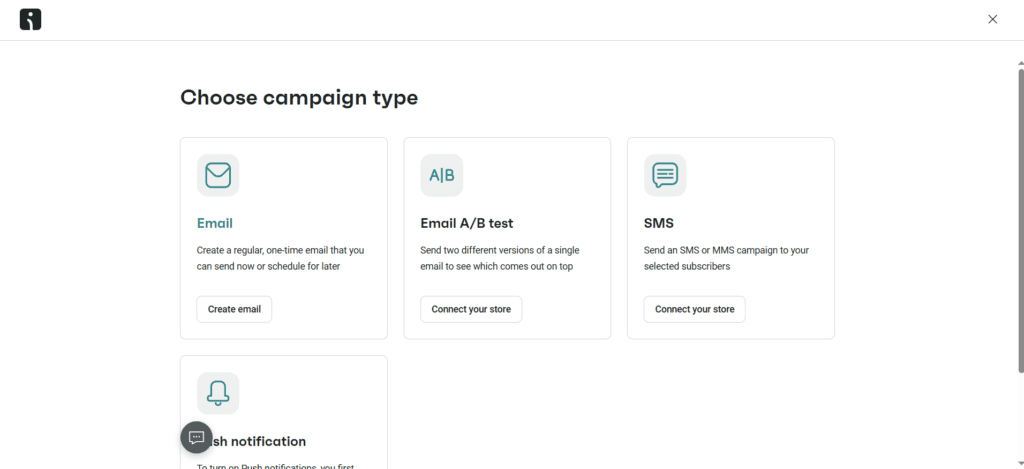
Emails may stay unread.
SMS usually gets seen faster.
Best use cases:
- cart reminders
- flash sales
- stock alerts
- payment reminders
This improves conversions. Note one important 2026 update: for new accounts created on or after May 4, 2026, Omnisend SMS is available only on the Pro plan, billed by volume from $0.007 per SMS with no included credits.
3. Push Notifications
Web push notifications are useful for bringing users back — and they are included even on the free plan.
Examples:
- back in stock
- price drop
- limited-time deal
This is highly effective for D2C brands.
4. Segmentation
This is where Omnisend becomes a serious growth tool.
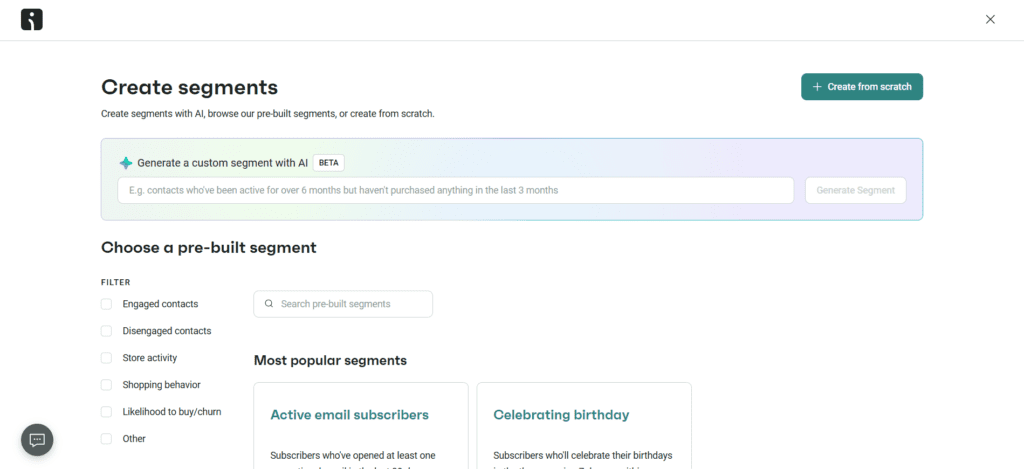
You can segment users based on:
- total spend
- purchase frequency
- product category
- location
- inactivity
This allows highly targeted campaigns.
Example:
Send premium product offers only to high spenders.
This increases conversion. On higher tiers, Omnisend’s AI features (dynamic content and personalized product recommendations) and revenue attribution reporting let you see exactly which automations are driving sales.
Omnisend Pricing 2026 Review: Is It Worth the Money?
Pricing matters.
Especially for startups and small businesses.
Omnisend uses contact-based pricing — your monthly cost scales with the size of your contact list, not a flat fee. This makes it beginner-friendly to start and predictable as you grow.
If you are starting out, the Omnisend free plan is enough.
You can test workflows and email campaigns.
For scaling stores, paid plans become valuable because even a few recovered carts can cover the cost.
| Plan | Price (Starting) | Best For | Email Limit | Contacts Limit |
|---|---|---|---|---|
| Free | $0/month | Beginners & testing | 500 emails/month | Up to 250 contacts |
| Standard | From $16/month | Growing eCommerce brands | 12× contacts (e.g. 6,000) | From 500 (scales) |
| Pro | From $59/month | High-volume + SMS senders | Unlimited emails | From 2,500 (scales) |
| Custom | Custom pricing | Large enterprises | Unlimited | Custom |
How Omnisend pricing actually scales on the Standard plan: roughly $16/month at 500 contacts, about $25 at 1,000, around $65 at 5,000, and about $132 at 10,000 contacts. The Pro plan adds unlimited emails and starts at $59/month for 2,500 contacts.
A few things to watch so you are not surprised on your bill: the cheaper $11.20/month (Standard) and $41.30/month (Pro) figures you may see advertised are 3-month-upfront intro prices that revert to standard monthly rates afterward; billable contacts include non-subscribers who receive automated messages, not just opted-in subscribers; product recommendations are a ~$5/month add-on on Standard; and free-plan emails carry Omnisend branding.
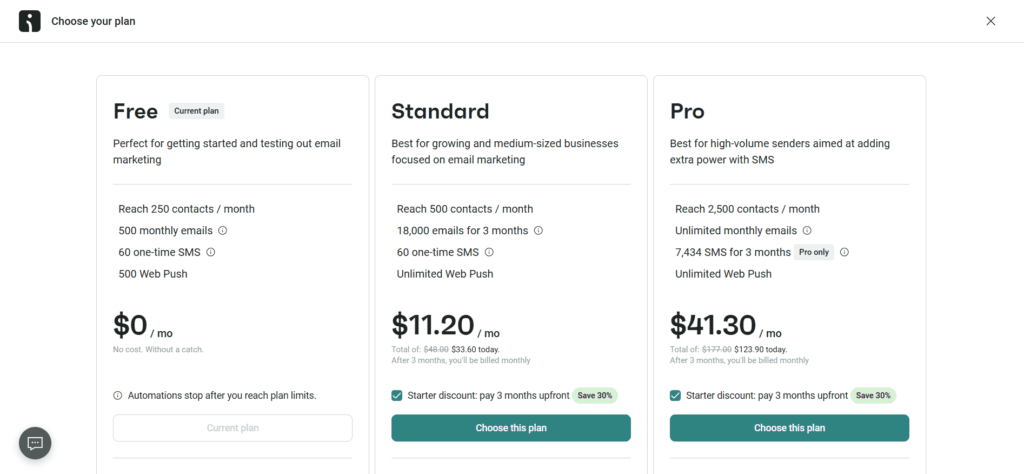
So, is Omnisend worth the money? For most Shopify and WooCommerce stores, yes — it delivers Klaviyo-level automation at a noticeably lower price, and recovered carts usually pay for the plan.
Omnisend vs Mailchimp
Choose Omnisend If You Need
- eCommerce workflows
- cart recovery
- SMS support
- product-based campaigns
- better store integrations
Choose Mailchimp If You Need
- general newsletter marketing
- service business campaigns
- content-based audience
For eCommerce, Omnisend usually feels more purpose-built than Mailchimp.
I Tested MailChimp for 7 Days with Real Workflows Read Detailed Review. ClickHere
Omnisend vs Klaviyo
This is another common comparison.
Klaviyo is powerful but often more advanced and more expensive — it costs more than Omnisend at every contact tier (for example, around $132/month vs roughly $240/month at 10,000 contacts).
Omnisend feels easier.
Choose Omnisend If
- beginner
- small-medium store
- faster setup needed
- better usability and lower cost
Choose Klaviyo If
- advanced analytics needed (predictive CLV, churn risk)
- enterprise level segmentation
- bigger team workflows
For most growing stores, Omnisend is easier to manage and more affordable. If you outgrow it, popular Omnisend alternatives include Klaviyo (data-heavy brands), ActiveCampaign (advanced automation), MailerLite (beginners), and GetResponse (funnels and webinars).
Who Should Use Omnisend?
Best for:
- Shopify store owners
- WooCommerce users
- dropshipping businesses
- D2C brands
- product-based startups
Who Should Avoid It?
Not ideal for:
- local service businesses
- coaching businesses
- B2B consulting
- bloggers without product sales
Because it is designed mainly for eCommerce. The interface and support are also English-only, and it lacks CRM-style lead management.
My Honest Verdict After Deep Review
If your biggest problems are:
- abandoned carts
- poor repeat sales
- weak retention
- low email conversions
Then Omnisend is absolutely worth considering.
Its biggest strengths are:
- easy setup
- eCommerce-first workflows
- strong automation
- email + SMS together
- excellent retention use cases
For online stores, it solves real business problems. The main trade-offs are that costs rise as your list grows and it has no predictive analytics like Klaviyo.
Conclusion
Omnisend is not just another email tool.
It is a revenue recovery and customer retention platform.
If your store is already getting traffic but sales are inconsistent, this tool can directly help fix the conversion gap.
My recommendation:
Start with these 3 workflows first:
- welcome series
- abandoned cart recovery
- post-purchase follow-up
These alone can significantly improve revenue. You can start with Omnisend’s free plan and upgrade only once it is paying for itself.
Related Reading
- Best Email Marketing and Automation Tools 2026 (full roundup)
- Drip Review 2026
- Best Email Marketing Tools for Shopify
- Abandoned Cart Email Flow Guide
1.Is Omnisend good for Shopify?
Yes, Omnisend works extremely well with Shopify. It offers seamless native integration, pre-built automation workflows, and powerful tools specifically designed for online stores, plus a 4.7–4.8★ rating on the Shopify App Store — making it a great choice for Shopify users.
2.Does Omnisend support SMS?
Yes, Omnisend supports both email and SMS marketing in combined campaigns and workflows. Note that for new accounts from May 4, 2026, SMS is available only on the Pro plan, billed by volume from $0.007 per SMS with no included credits.
3.Is Omnisend free?
Yes, Omnisend offers a permanent free plan with up to 250 contacts and 500 emails per month, plus 500 web push notifications and almost all features. It is ideal for beginners and testing, though free-plan emails carry Omnisend branding.
4.Can Omnisend recover abandoned carts?
Absolutely. Abandoned cart recovery is one of Omnisend’s strongest features. It automatically sends timed reminder emails and SMS messages to bring customers back and complete their purchase, and it is usually the fastest way to see ROI.
5.Is Omnisend better than Mailchimp?
For eCommerce businesses, Omnisend is often considered better than Mailchimp due to its ease of use, ecommerce-first automation, and built-in features like cart recovery and product-based campaigns. Mailchimp is the better generalist tool for newsletters and non-store businesses.
6.Does it work with WooCommerce?
Yes, Omnisend integrates smoothly with WooCommerce (and Shopify and BigCommerce), syncing store data so you can automate email, SMS, and push campaigns based on customer behavior.
7.Is Omnisend worth buying?
If you run an online store, Omnisend is definitely worth considering. Its automation, segmentation, and multi-channel marketing features can significantly boost sales and customer engagement, often at a lower cost than Klaviyo.
8.How much does Omnisend cost in 2026?
Omnisend’s Standard plan starts at $16/month for 500 contacts and scales with your list size (around $132/month at 10,000 contacts). The Pro plan starts at $59/month with unlimited emails. There is also a free plan and a custom enterprise tier.
9.Omnisend vs Klaviyo — which is better?
Choose Omnisend for lower cost, faster setup, and a strong free plan with SMS and segments included. Choose Klaviyo if you are a larger, data-driven brand that needs predictive analytics (CLV, churn risk) and advanced segmentation and can absorb the higher price.
10.What are the best Omnisend alternatives?
The top Omnisend alternatives in 2026 are Klaviyo (for data-heavy brands), ActiveCampaign (advanced automation), MailerLite (beginners and budget users), GetResponse (funnels and webinars), and Moosend (affordable all-round automation).





I am Ashish Yadav a software engineer and AI tools researcher with over five years of practical experience working with real-world systems and automation. I am founder of CognifyFuture, where I analyzes, tests, and breaks down AI tools with a focus on what actually works—not what’s trending.
My content is built on hands-on usage, not theory. Instead of generic advice, I focuses on real implementation—how AI tools can be used to automate tasks, improve efficiency, and solve any specific business or individual problems.
Through CognifyFuture, My aims is to eliminate confusion around AI by delivering clear, honest, and actionable insights that help users make smarter technology decisions.